
The Quiet Hydrogen Revolution Is Now Rolling Across Asia's Roads
While major industrial conglomerates are investing billions in new hydrogen infrastructure and governments continue debating the ideal transition pathway, dynaCERT is pursuing a different approach: making existing diesel technology immediately more efficient, cleaner, and more economical. This is precisely where the strategic strength of the Canadian company lies, as it focuses on a global rollout. After all, the transportation and heavy industry sectors cannot replace their existing fleets overnight. The reality is that millions of diesel engines will remain in use for decades due to their immense mileage. dynaCERT is positioning itself exactly in this transition phase as a pragmatic bridge-builder between the old and new energy worlds. And at very manageable costs!
The timing could hardly be better. High energy costs, ESG pressure, stricter emissions regulations, and geopolitical uncertainties are increasing the pressure to act on transport, mining, and logistics companies worldwide. Especially in emerging markets, operators of large vehicle fleets are facing increasing margin pressure. At the same time, these regions often lack the financial resources and infrastructure needed for a complete transition to new battery-electric or hydrogen-powered vehicles. This is where dynaCERT steps in with a retrofit model that can be deployed immediately. Instead of investing billions in new fleets, the technology enables efficiency improvements in existing diesel engines directly during operation, with a direct, measurable cost-reduction effect.
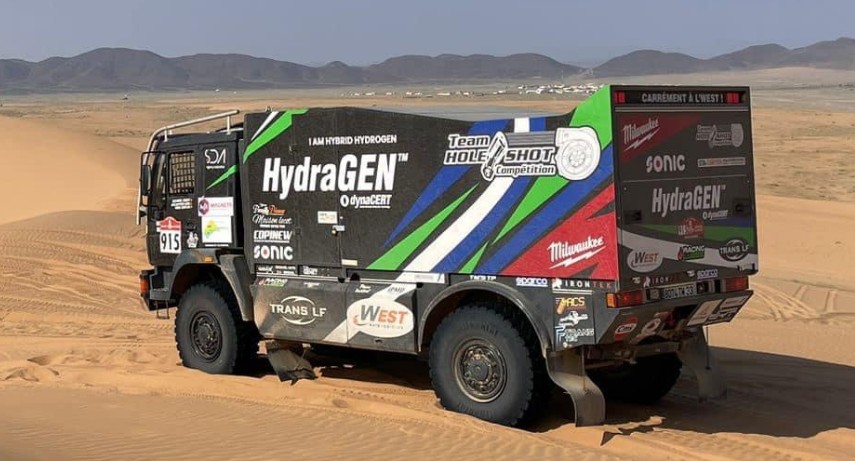
HydraGEN™ – When Hydrogen Makes Diesel Smarter
At the core of the business model is the patented HydraGEN™ technology. A compact on-board electrolysis system generates hydrogen and oxygen exactly when the engine needs them. The gases are fed into the combustion process, significantly improving the efficiency of the diesel engine. The result is lower fuel costs, reduced emissions, and improved overall performance of heavy machinery and commercial vehicles. Of particular interest is the economic leverage this offers fleet operators. Even moderate fuel savings have a significant impact on the cost structure over thousands of operating hours per year. dynaCERT reports potential savings of 5 to 15%, while pollutant emissions can be drastically reduced. This results in an attractive return on investment, particularly for long-haul trucks, mining equipment, port logistics, generators, and oil and gas facilities.
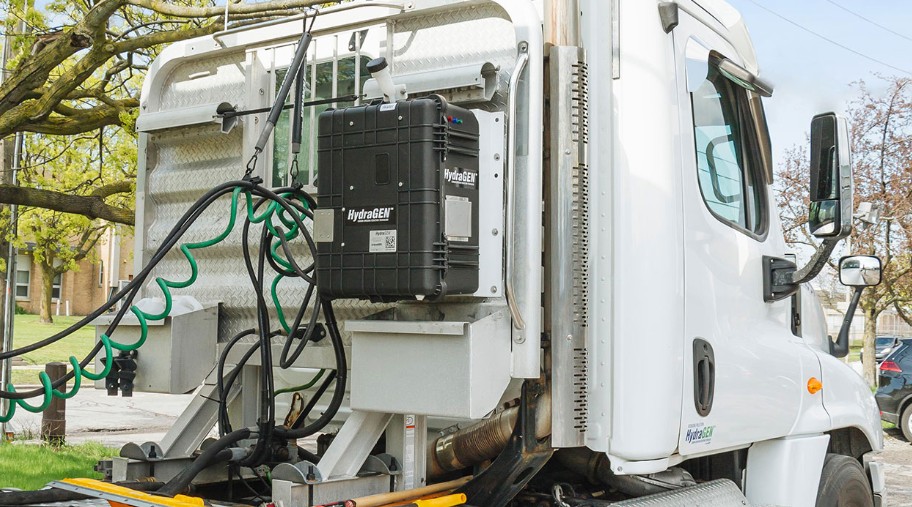
Added to this is a second strategic component: the HydraLytica™ digital emissions platform. This software monitors CO₂ reductions and fuel savings in real time. As a result, dynaCERT is increasingly evolving from a traditional hardware provider into a data-driven cleantech company. The combination of efficiency technology, a data platform, and the potential monetization of emissions credits could thus become a decisive competitive advantage in the future. dynaCERT enables retrofitting existing systems without the need for costly new vehicle or power generator purchases. In doing so, the Canadian company is also contributing to the environmental circular economy, in line with the principle of "upgrade instead of throw away."
Southeast Asia Is Becoming A Strategic Door Opener
The expansion into Vietnam is currently developing particularly dynamically. There, dynaCERT is encountering a market that seems tailor-made for the technology. More than 3.5 million diesel-powered heavy-duty vehicles, buses, and construction machines represent enormous retrofitting potential. At the same time, energy prices are rising sharply, while the government pursues the goal of climate neutrality by 2050. Companies are thus under dual pressure: to cut costs and reduce emissions. Recently, market entry has accelerated at a remarkable pace. The first pilot installations are already underway at logistics centers in Ho Chi Minh City, Hanoi, and Hải Phòng. In parallel, strategic partnerships have been established with the renowned Ho Chi Minh City University of Technology (HCMUT) and a leading Vietnamese oil and gas company. The academic collaboration, in particular, sends a strong signal, as it allows the technology to be validated under local conditions and supported by scientific research. Even more important, however, is the political and industrial foothold in the market. dynaCERT is now in direct talks with local government institutions, logistics companies, and energy operators. Vietnam could thus become far more than just a single market. Rather, a potential bridgehead for the entire ASEAN region is currently emerging. If the operational breakthrough succeeds there, a huge addressable market with millions of potential applications will open up for dynaCERT.
IIF moderator Lyndsay Malchuk in conversation with President & Director Bernd Krüper about the new hydrogen economy and its emerging relevance in the defence sector.
https://youtu.be/icxlB70MQFM?si=GJ2g8MrZ2Bm1m7IE
Carbon Credits – The Underestimated Revenue Lever
The most exciting aspect of the investment story is no longer solely the sale of the devices themselves. Instead, the monetization of CO₂ savings could establish itself as a second growth driver. This is where Verra certification comes into play, which has recently significantly boosted dynaCERT's value. HydraLytica™ enables the precise measurement and documentation of emission reductions from individual vehicles. This opens up access to the global market for tradable CO₂ credits in the future, thereby creating an additional economic incentive for fleet operators to adopt the technology. The investment could pay for itself in the future, not only through lower diesel consumption but also through the sale of carbon credits generated. This model is becoming increasingly attractive, particularly in regulated markets with high ESG pressure. Strategically, this also changes the company's valuation perspective, as recurring revenue from credits and data services has significantly higher margins than the traditional hardware business.
Conclusion: dynaCERT Opens A New Chapter In The Hydrogen Economy
dynaCERT is not addressing a future scenario decades from now, but rather an acute problem of the present. Millions of existing diesel engines must become more efficient and cleaner long before full hydrogen or electric mobility becomes a global reality. With its certified HydraGEN™ technology, dynaCERT currently occupies a rare strategic sweet spot between economic viability, regulation, and decarbonization. The current progress in Vietnam could prove far more significant than a typical entry into a foreign market. Should the Canadians succeed in making the leap from pilot projects to large-scale fleet solutions there, this could serve as a blueprint for many regions around the world. At the management level, the company has recently set an important course. Founder Jim Payne stepped back from day-to-day operations after about 14 years and transitioned to the role of Chairman. Kevin Unrath, a relatively young manager who had previously overseen key sales and scaling processes as COO, took over as CEO. The setup is promising!
From an analytical perspective, a mathematical projection can now be made. In an initial assessment from September 2025, analysts at GBC Research modelled early-stage revenues, indicating that the company is at a pivotal point in its development. In their initial report, the analysts already assume revenues of CAD 21 million for 2026. The key difference compared to the previous phase is that dynaCERT is no longer reliant on pilot-stage test revenues, but is increasingly operating with a product that is proving itself in the real market. With the internationally certified HydraGEN™ system, a clearer sales narrative, and growing interest from conferences and potential partners, commercialization is visibly coming to the forefront.
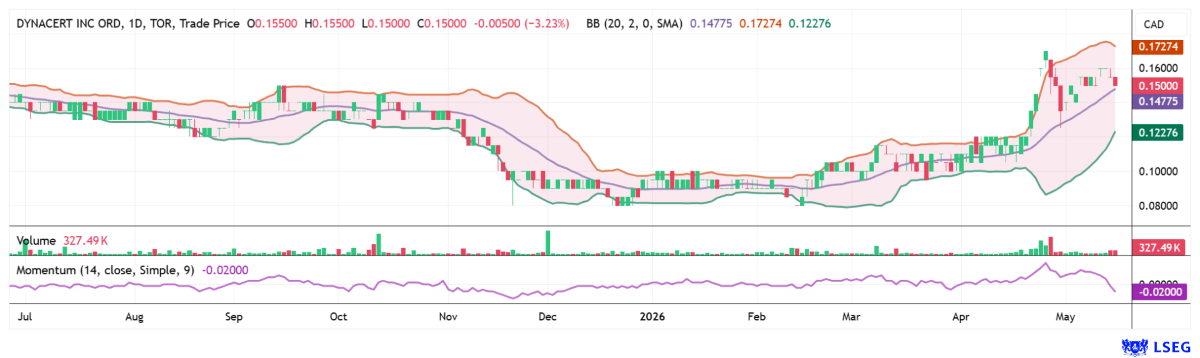
Based on a DCF model and key market assumptions, GBC assigns a "Buy" rating with a 12-month price target of CAD 0.75 per share, 500% above the current level of CAD 0.15. This implies significant upside potential, driven by rising revenues, improving margins, and strategic positioning in the cleantech and hydrogen sectors. The focus is now on the growing tailwind from regulation, emissions trading, and industrial decarbonization, which is once again taking center stage in discussions amid the current Middle East conflict. In this environment in particular, dynaCERT can not only capitalize on a crisis premium but also become a potential acquisition target for larger industrial or technology conglomerates. This is because there is an increased need for practical concepts for a new era in the transportation and logistics industry amid rising raw material costs. Since the end of April, the stock's momentum has visibly picked up, and the fundamental revaluation could materialize quickly.
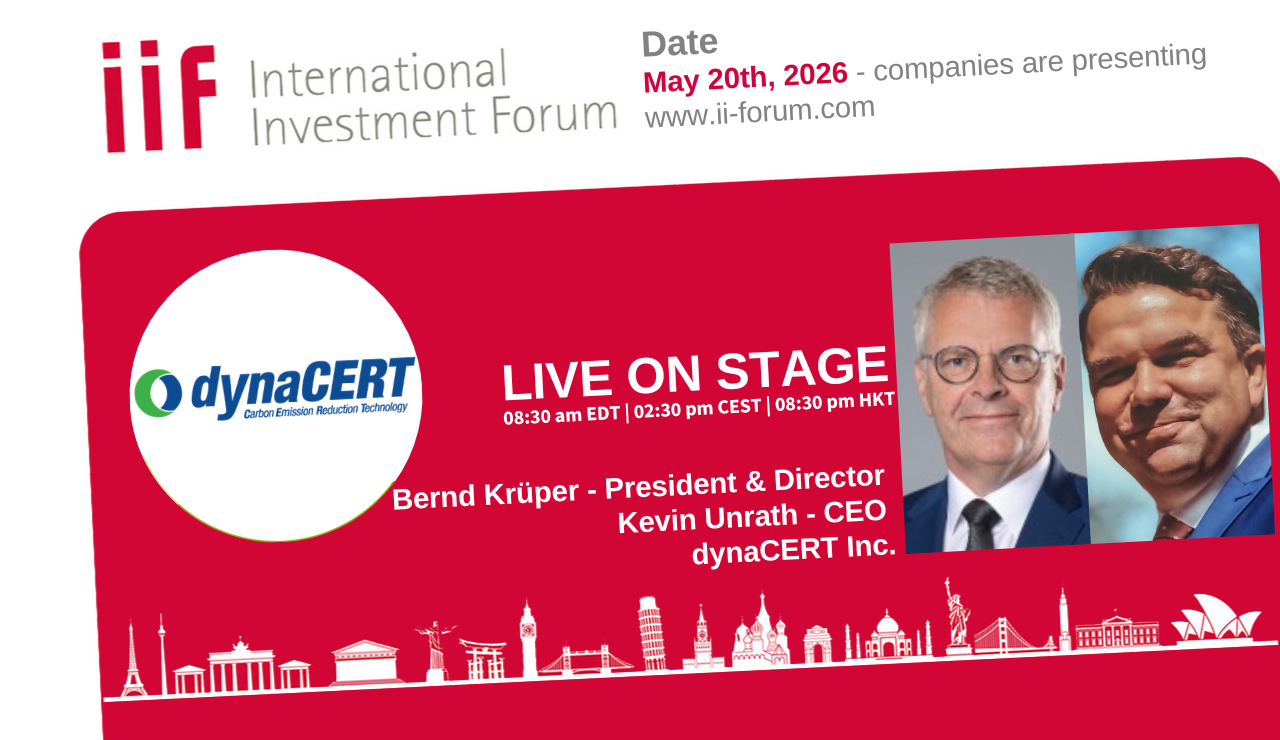
CEO Kevin Unrath and President Bernd Krüper will present their global strategy on May 20 at the 19th International Investment Forum at 2:30 pm CEST.Register now for free!
This update follows the initial Report 11/2022