
From Hydrogen Player to Deep-Tech Conglomerate
Just a few years ago, First Hydrogen (0.33 EUR | WKN: A3C40W | ISIN: CA32057N1042) was primarily perceived as a developer of hydrogen-powered commercial vehicles. However, a significantly broader technology profile is now emerging, interlinking hydrogen mobility, autonomous robotics, and nuclear energy supply. A brilliant move, as this combination could prove strategically valuable in the coming years, since many future markets do not function in isolation but scale only as interconnected infrastructure models. First Hydrogen is therefore not merely trying to sell vehicles, but to build an integrated energy and mobility ecosystem. The company is thus increasingly moving away from being a traditional niche fuel cell provider toward a platform approach for industrial energy, logistics, and security applications.
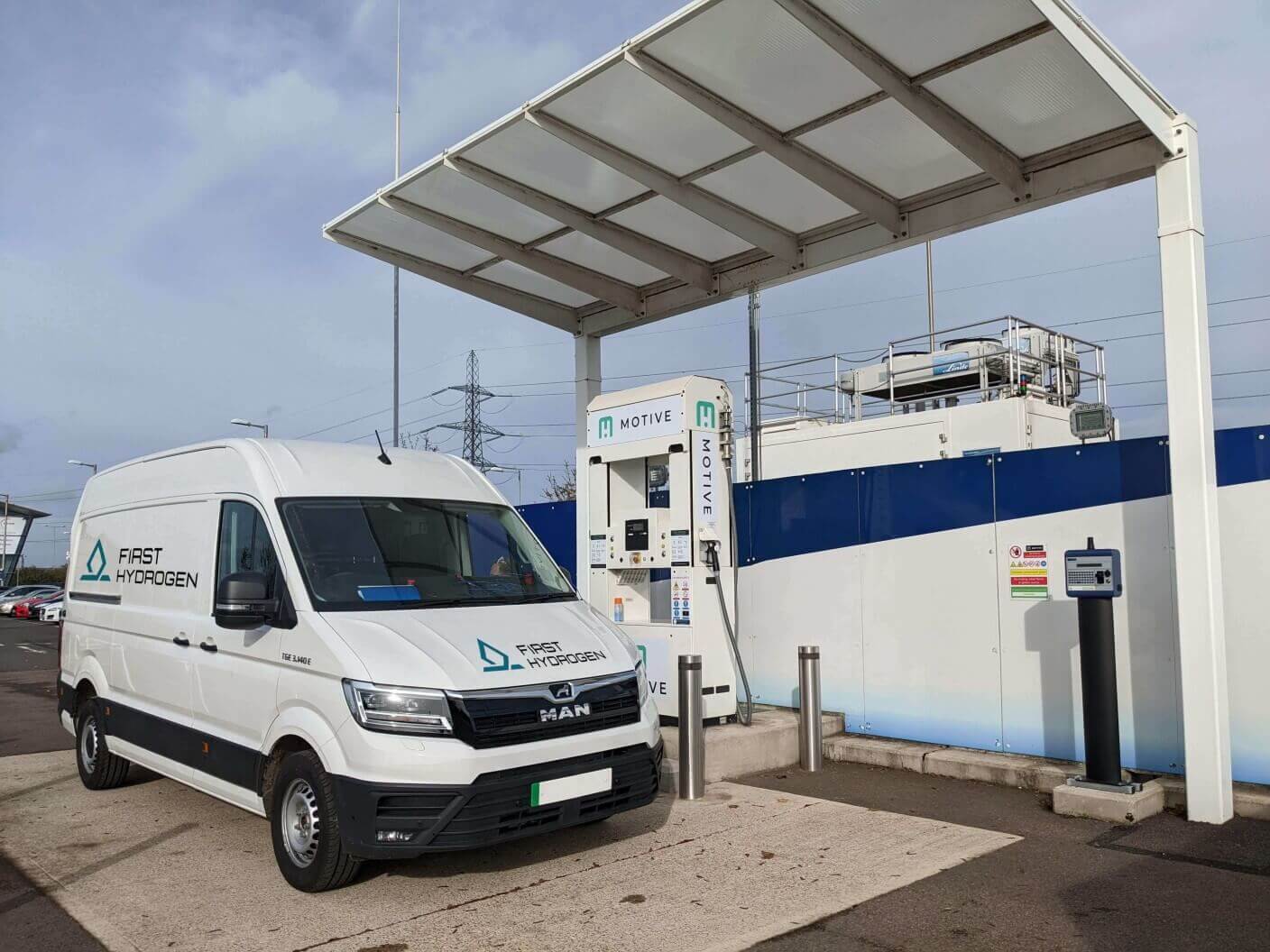
The original core idea remains: zero-emission mobility for multiple applications. The initial focus was on hydrogen-powered light commercial vehicles, intended to offer range advantages over battery-electric solutions, particularly in delivery and logistics. Instead of relying exclusively on vehicle sales, the company now pursues a recurring "Hydrogen-as-a-Service" model that combines hydrogen supply, refuelling infrastructure, and operational services. This creates a predictable, long-term approach similar to modern infrastructure or software models. It is particularly relevant that First Hydrogen does not merely aim to develop hardware but addresses the entire operational ecosystem surrounding hydrogen mobility.
Europe's Energy and Transportation Transition Opens up Target Markets Worth Billions
First Hydrogen is looking beyond North America to Europe as well. This focus makes sense, as Brussels has allocated EUR 300-400 billion to the energy transition. With the "Green Deal," the European Union is driving forward one of the world's largest transformation programs for energy, industry, and infrastructure. The goal is to make Europe climate-neutral by 2050 while significantly reducing dependence on fossil fuel imports. To this end, Brussels is investing heavily in hydrogen technologies, power grids, battery storage, renewable energy, and new strategic raw material and production capacities across Europe. Programs such as "REPowerEU" or the "Net-Zero Industry Act" are also intended to secure the energy supply and strengthen Europe's competitiveness vis-à-vis the US and China. Companies in the hydrogen, clean mobility, energy storage, and modern nuclear technology sectors, in particular, are increasingly benefiting from subsidies, regulatory support, and accelerated approval processes. The market in question is growing dynamically as several structural trends converge. Public institutions are pushing for CO2 reduction, logistics companies are seeking long-range solutions that can be refuelled quickly, and industrial operators increasingly require self-sufficient energy supply systems. In Europe in particular, regulatory pressure is giving rise to new investment programs for hydrogen infrastructure, while Canada is additionally focusing on raw material and energy independence.
SMRs and the AI Boom: First Nuclear Emerges as the Next Strategic Lever in the Energy Sector
At the same time, the company is now also working on the energy source of the future. Through its subsidiary "First Nuclear," the focus is on Small Modular Reactors (SMRs) - compact next-generation nuclear reactors. These systems are designed to deliver large quantities of low-carbon electricity regardless of weather conditions, thereby securing the production of green hydrogen. This could become a decisive competitive advantage, particularly for energy-intensive applications such as AI data centers or industrial hydrogen production. This is because global electricity demand is rising massively due to artificial intelligence, cloud infrastructure, and digitalization. First Hydrogen is therefore seeking to position itself early in a market that many investors are only slowly discovering.
Particularly noteworthy is the strategic link between hydrogen, nuclear technology, and artificial intelligence. Modern data centers require many times more energy than traditional IT infrastructures. This is why SMRs are currently gaining importance worldwide, as they can provide a consistently stable energy supply. To this end, First Hydrogen is collaborating with scientific partners in Canada, among others, to further develop material and design aspects of new reactor concepts. Should the SMR market indeed accelerate as expected, today's positioning could prove to be remarkably early in hindsight. The market is only just beginning to realize that energy supply and AI infrastructure are likely to be inextricably linked in the future.
Robotics Initiative: First Hydrogen is Building for the Future of Unmanned Mobility
First Hydrogen also aims to close the energy loop in the defence sector. With its latest announcement, the company is already moving to the next level by assembling a top-tier development team for unmanned ground vehicles (UGVs) that combines expertise in robotics, aviation, defence, and cleantech. The team covers the entire value chain—from design and software development through prototyping to industrial manufacturing—and brings an impressive portfolio of over 100 patents. The focus is on robust, versatile drone and vehicle platforms designed to withstand even extreme operating environments, ranging from logistics to defence.

Strategically particularly exciting: the new development group has experience in related technology areas. These include novel actuators, high-torque electric motors, modern drive systems, hydrogen compressors, and energy-efficient mechanical architectures. This technological depth could prove decisive if First Hydrogen indeed intends to develop robust UGV platforms for real-world operational environments. This is because autonomous systems for industry, defence, or critical infrastructure require significantly higher resilience than traditional delivery robots for urban areas. The company is thus increasingly positioning itself in the high-end segment of autonomous mobility solutions. The vision is this: combining hydrogen technology with autonomous systems could secure First Hydrogen a key role in the emerging market for emission-free, unmanned mobility. Given a projected global drone market of over USD 180 billion by 2033, the company is positioning itself early in a dynamically growing future segment.
Conclusion: First Hydrogen is Already Thinking on an Industrial Scale
With every new announcement, it becomes increasingly clear that First Hydrogen does not view hydrogen as an isolated energy source. Rather, an integrated technology portfolio is emerging step by step, comprising zero-emission energy supply, autonomous mobility, and AI-powered robotics. This is precisely where the company's true long-term value could lie. State-of-the-art autonomous systems require powerful, mobile, and long-lasting energy sources—especially in remote areas far from traditional infrastructure. This is where First Hydrogen's positioning becomes particularly relevant, as the company has extensive experience with autonomous energy sources dating back to its founding.
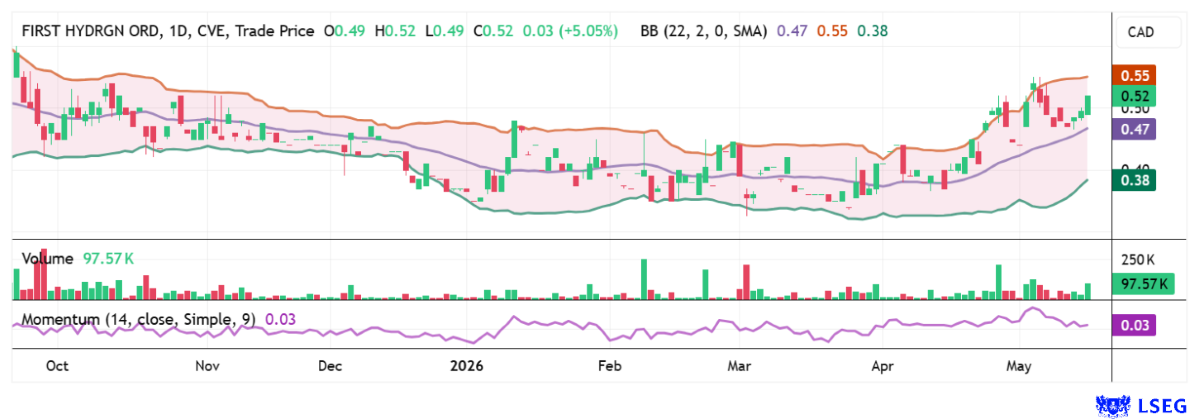
The FHYD stock currently appears particularly interesting from a technical perspective. If successful, investors stand to benefit from significant leverage effects as individual business segments gain operational momentum. It will also be interesting to see whether First Hydrogen can soon announce its first strategic industry partners in the defence or robotics sectors. This is precisely where it will be determined whether the current technological vision can evolve into a scalable business model. Risk-conscious investors should also think one step ahead: the comparatively low market capitalization of just under CAD 47 million could quickly attract potential acquirers. This keeps the tech story highly exciting!
This update is based on the initial Report 07/2022