
Sangdong Is Up and Running: Potential Is Now Turning Into Measurable Production
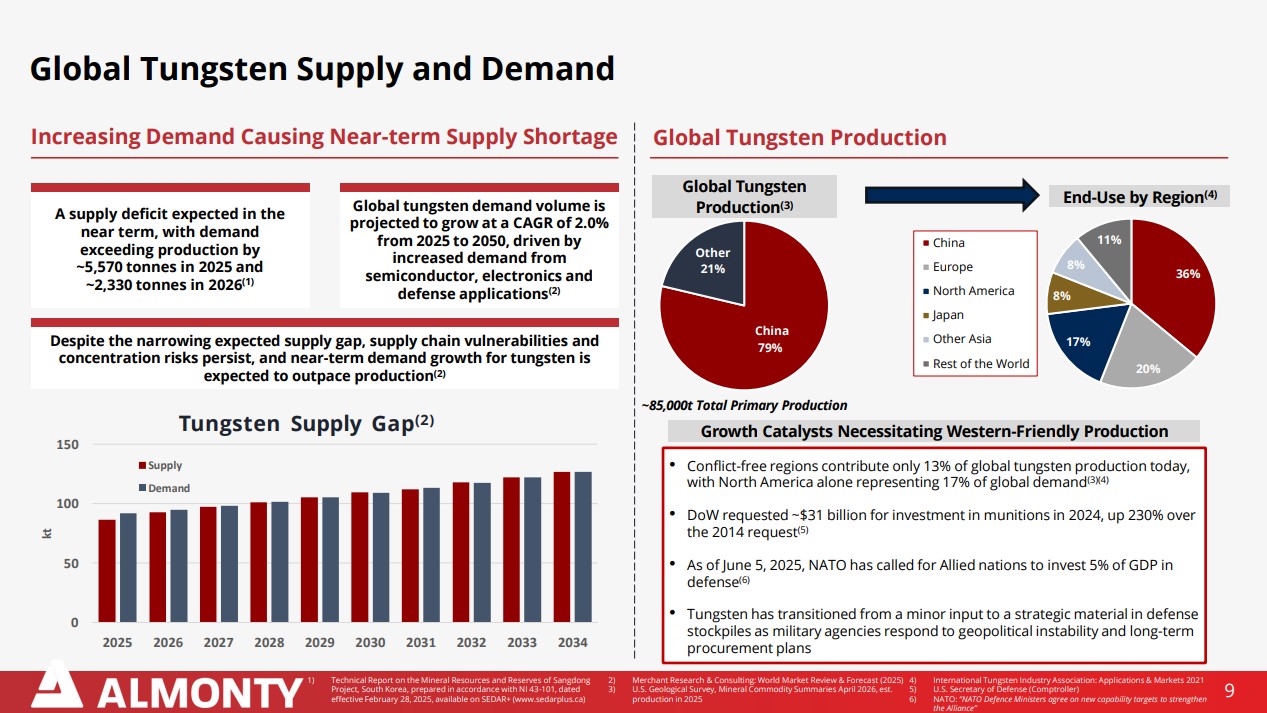
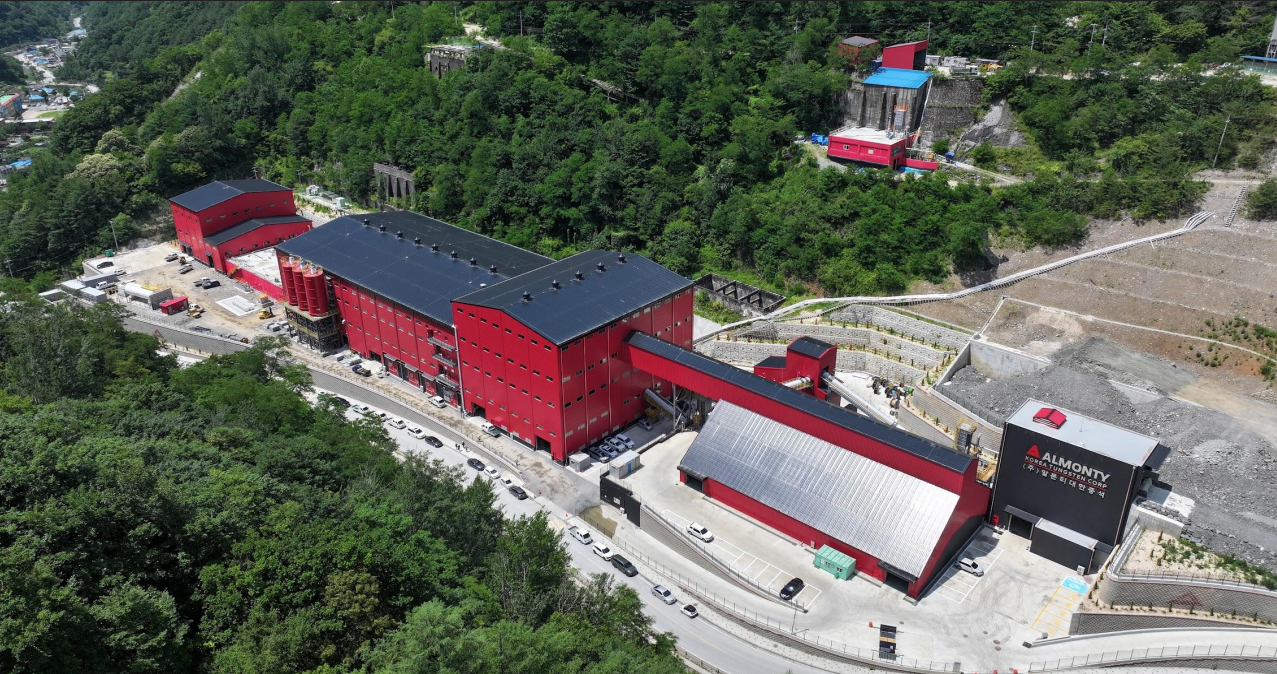
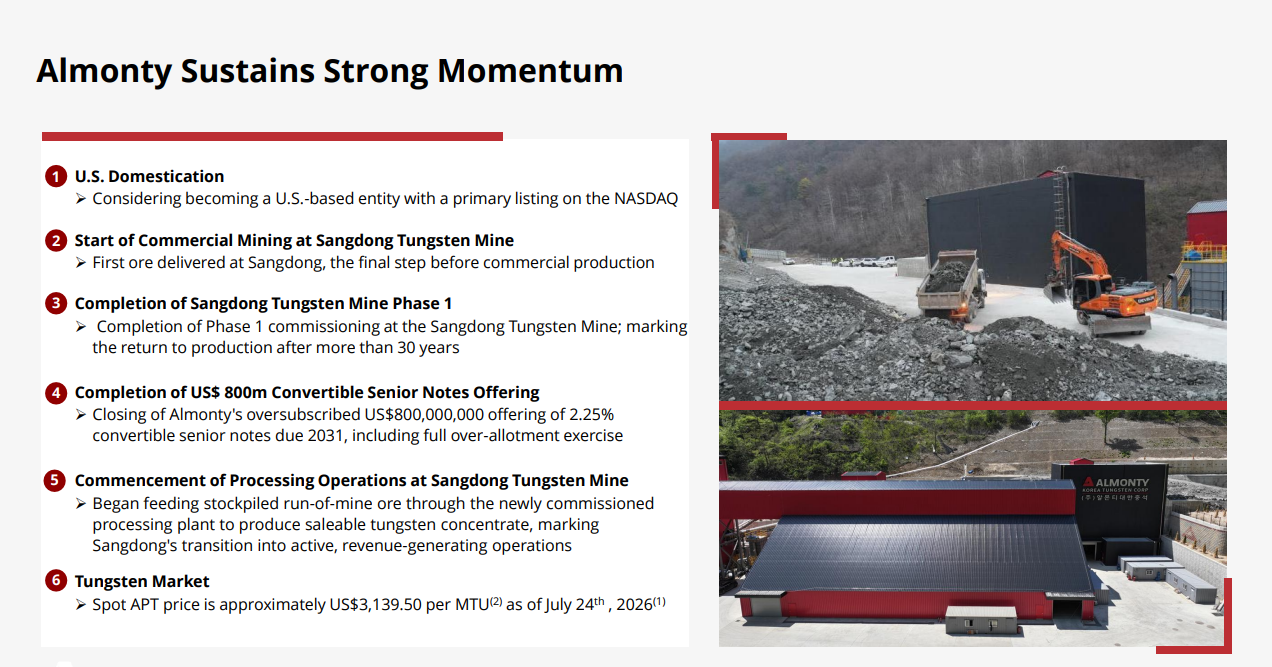
The most important operational milestone in the company's history has been reached. Almonty has commissioned the processing plant at the Sangdong Mine in South Korea and is processing mined material into marketable tungsten concentrate. With this, the project has definitively transitioned from a multi-billion-dollar development project to an operational production site. The company was able to draw on an extensive ore inventory for the controlled production ramp-up. The material will initially be used to optimize processing operations under real-world conditions and to adjust all parameters to achieve the most efficient possible metal recovery. Only as operational experience grows will additional, higher-grade sections of the deposit be gradually integrated into the processing workflow.
The long-term perspective is crucial. Once fully ramped up, Phase I is expected to reach a throughput capacity of approximately 640,000 metric tons of ore per year. At the same time, the foundation for a Phase II expansion is already in place, which could eventually increase capacity to up to 1.2 million metric tons annually. This means that Almonty not only has a production launch but also a clearly defined growth path within the same world-class deposit. The capital market will likely have to increasingly come to terms with this shift. Whereas discussions previously focused primarily on construction progress, permits, and financing issues, production volumes, margins, and cash flows will determine the valuation going forward. Step by step, Almonty is moving from the story of a future tungsten producer to that of an actual producing mining company.
The 21-Year Contract: Revenues Projected for Decades
Just as important as production itself is the question of who will purchase the future volumes. In this regard, Almonty has taken an exceptionally important strategic step. The long-term offtake agreement with Global Tungsten & Powders, a company within the Austrian Plansee Group, has been significantly expanded. The term was extended from the original 15 years to 21 years. At the same time, the total contractually agreed-upon volumes increased by 40% to 4.41 million MTU. In addition, the pricing terms for all contractually bound volumes improved by approximately 6.3%. Based on the current APT prices at the time, this corresponded to an expected contracted annual revenue of approximately USD 490 million. It is particularly noteworthy, however, that this contract focuses on Phase I of Sangdong. Potential additional capacities from Phase II or other projects are therefore not necessarily fully included in this revenue base, which is already secured for the long term.
Montana Takes Centre Stage: An Entire Tungsten District Comes into Focus
Alongside South Korea, the US project pipeline is emerging as an increasingly interesting second strategic focus. The Gentung Project in Montana is located in a region with a history of tungsten production and thus holds particular geological and geopolitical significance. The entire district is receiving additional attention due to exploration work at the neighbouring Pioneer Tungsten Project operated by Red Mountain Mining. Initial sampling there reported tungsten grades of up to 0.32% WO₃. These grades are roughly on par with those of Almonty's immediately adjacent Gentung deposit, for which a mineral resource of 6.83 million metric tons at 0.315% WO₃ has been reported. The current systematic sampling program is now intended to better define the extent, geometry, and continuity of the near-surface mineralization. Should the results be positive, drilling could follow. For Almonty, this development is strategically significant because it not only affects its own project but also potentially underscores the importance of an entire tungsten belt in Montana. At a time when the US is seeking to increasingly secure its supply of critical raw materials from allied countries and its own territory, an American tungsten site could gain considerable strategic value.
The Numbers Provide Initial Evidence: Almonty's Profitability Is Becoming Apparent
The latest quarterly figures impressively demonstrate that the operational transformation is now also reflected in the financial metrics. In the second quarter of 2026, revenue rose to CAD 43.0 million, up 498% from the same quarter a year earlier. Compared to the first quarter, this represented further growth of 69%. The change is even more pronounced in operating income. The mining operation generated an operating profit of CAD 26.1 million, after reporting an operating loss in the same period of the previous year. Adjusted EBITDA also turned decisively positive, reaching CAD 17.6 million. This demonstrates for the first time the operational leverage that Almonty's business model can generate when tungsten prices are high. According to the company, the operating margin from mining exceeded 60% of revenue. At the same time, the company generated a positive operating cash flow of CAD 31.6 million in the first half of the year, whereas cash had been depleted in the same period the previous year. However, an important distinction must be made regarding the reported quarterly profit of CAD 181.8 million. A significant portion resulted from non-cash valuation gains on derivative financial instruments and should therefore not be equated with current operating cash flow. For the investment thesis, therefore, the trends in revenue, operating mining income, EBITDA, and cash flow are significantly more meaningful. And it is precisely these metrics that show a massive improvement.
As a result, Almonty had approximately CAD 1.2 billion in cash and cash equivalents at the end of the second quarter. This financial strength opens up a strategic option for management that is exceptional for a commodities company of this size: multiple projects can be advanced simultaneously. Phase II in Sangdong, the planned tungsten oxide processing facility in South Korea; the development of the Gentung project in Montana; and the expansion of the Panasqueira operations in Portugal no longer need to be carried out on a long, sequential timeline.
Smart Money and Index Funds: The Shareholder Base Is Broadening
Almonty has also reached a new level of prominence on the stock market. With its inclusion in the Russell 1000 and Russell 3000 indices, the company has become relevant to a significantly broader group of institutional investors. Index funds and benchmark-oriented asset managers systematically include the stocks in these indices. This expands the potential investor base, and the stock can benefit in the long term from a stronger institutional market presence. At the same time, Almonty is aligning its capital markets strategy more closely with North America. The focus on the Nasdaq underscores the company's ambition to position itself where both large institutional investors and strategic technology and defense companies are particularly well represented. This shift is thus also evident at the capital markets level. What was once a classic small-cap raw materials stock is evolving into a company that is increasingly appearing on the radar of international investors.
Management Takes Action: Up to USD 300 Million for Share Buybacks
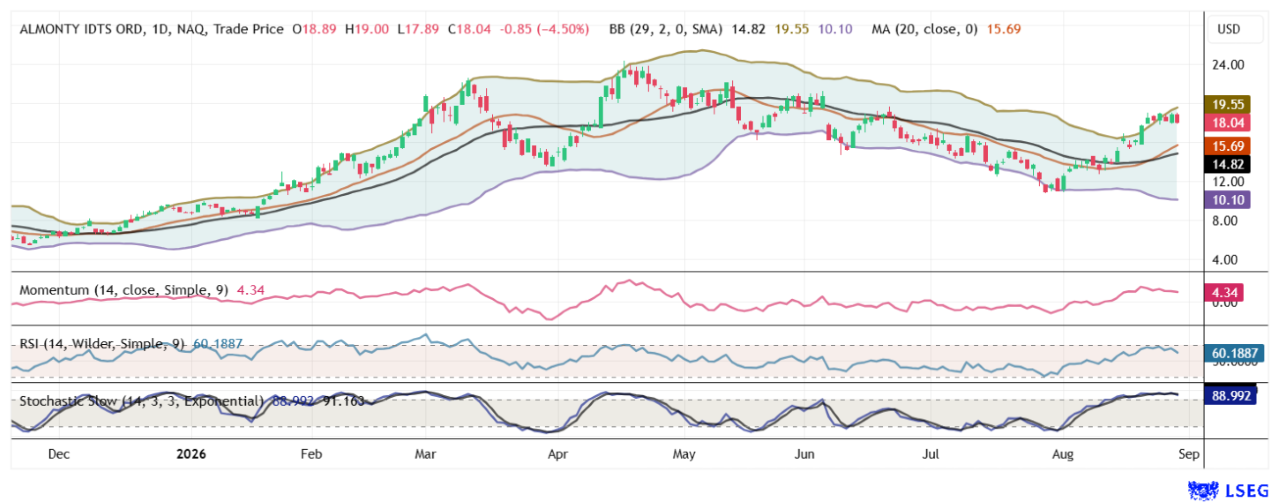
Perhaps the strongest new message from the capital markets came in mid-August. Almonty's board of directors approved a share repurchase program with a total volume of up to USD 300 million. Over a period of 36 months, up to 14.4 million shares may be repurchased. This corresponds to approximately 5% of the shares outstanding at that time. Purchases may be made via Nasdaq and other authorized trading systems. The significance lies less in the theoretical maximum amount than in the signal it sends. A company that has just raised enormous amounts of capital for its growth strategy is simultaneously declaring publicly that, in management's view, its own stock does not adequately reflect the fundamental value of its assets and future growth opportunities. Of course, a share buyback program is no guarantee of rising share prices, and the actual amount and timing of the purchases are at the company's discretion. Nevertheless, the decision reflects a remarkable capital allocation strategy: Almonty can simultaneously finance operational expansion and, provided management considers the valuation attractive, invest its own capital in its own stock. Especially following a period of high price volatility, such as that seen in July 2026, this program could therefore become an important psychological and fundamental factor for the capital market.
Overview of Mid-Term Catalysts
- Phase 1: Commissioning and ramp-up at the Sangdong mine in South Korea are proceeding according to plan
- Phase 2: Increase in mill processing capacity or construction of a new facility to reach a target of 1.2 million metric tons of ore annually
- Tungsten: 21-year offtake agreement signed with GTP (US)
- Potential increase in output at the Panasqueira mine in Portugal to up to 300,000 MTU
- Drilling program for molybdenum launched
- Processing of tungsten concentrate into tungsten oxide, which is used in semiconductors and batteries
- LOI for downstream project financing of USD 50 million with KfW
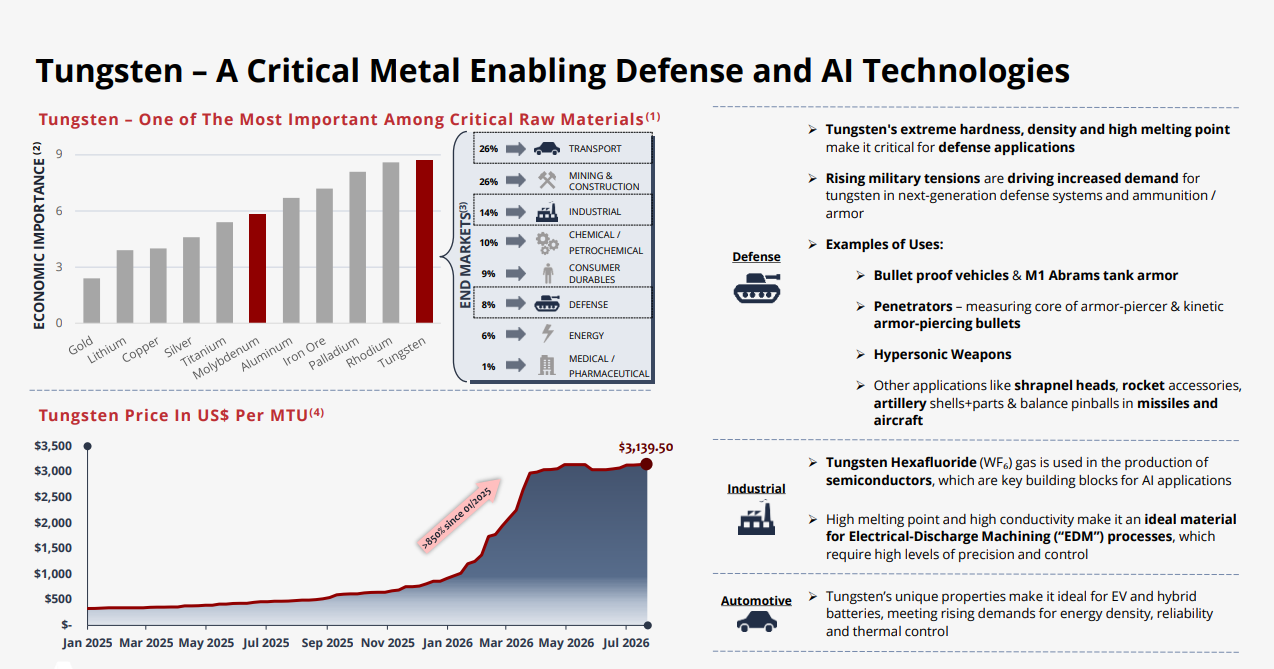
- Low production costs estimated at USD 126.80 per MTU (APT) - Current market price > USD 3,000
- Production in the US: Reactivation of the historic Gentung Mine in Montana
- Inclusion of molybdenum as an additional source of cash flow in South Korea
Analysts See Significant Potential
With the start of production and significantly improved financial metrics, the basis for analysts' valuations has also changed. Instead of pricing in exclusively future resources and long-term project models, the capital market is increasingly able to analyze actual operating metrics. Previous positive analyst assessments were already based on Sangdong's expected profitability and the exceptional conditions in the tungsten market. With the actual production ramp-up underway, the crucial question is becoming more concrete: How quickly will Sangdong reach its planned capacity, and what margins can be sustainably achieved at current tungsten prices?
This is the key valuation driver for the coming quarters. If the ramp-up proceeds as planned, rising production volumes could directly impact revenue and operating results. At the same time, the successful development of additional projects would secure long-term growth beyond Sangdong. Nevertheless, the risks should not be ignored. Production ramp-ups can cause delays, commodity prices remain volatile, and the actual implementation of growth projects will require time and capital. Precisely for this reason, the upcoming quarterly reports are likely to be far more important for the new investment story than individual short-term price movements.
Conclusion: The Almonty Story Is Different Now
The key difference from the past is not that Almonty owns more tungsten today than it did yesterday, but rather that the company is beginning to translate the potential it has built up over many years into an operational business model. Sangdong is in the ramp-up phase, long-term sales volumes are secured for decades to come, and the balance sheet has a capital base that can support additional growth projects in parallel. At the same time, the Q2 figures have clearly demonstrated for the first time the operational momentum that can arise when tungsten prices are high.
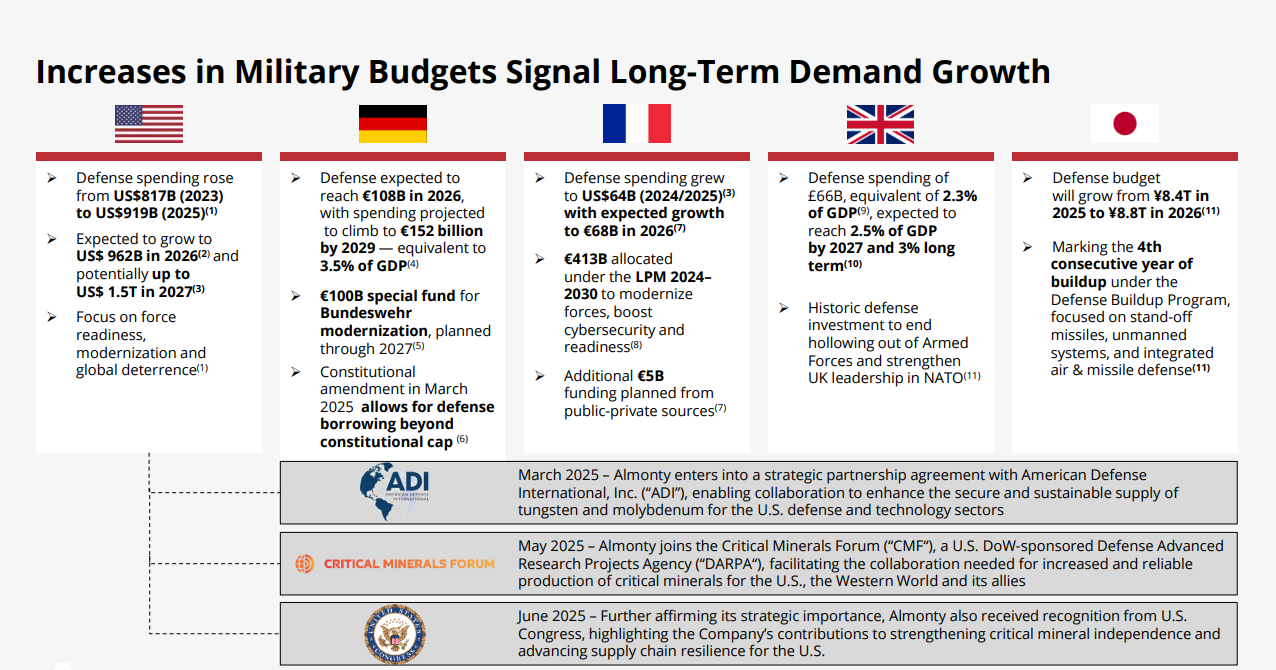
In any case, NATO countries make no secret of the fact that the situation today is different from what it was before 2022. The enormous consumption of ammunition driven by current geopolitical conflicts has caused the strategic reserves of defense contractors to shrink dramatically. Compounding the issue is the fact that the US REEShore Act strictly prohibits the use of Chinese tungsten in US military equipment starting in 2026. NATO countries are therefore forced, under significant time pressure, to establish alternative, Western-controlled supply chains—such as the Sangdong mine in South Korea—to guarantee their national security and defense capabilities.
Investors should factor this into their medium-term investment strategy!
Analysts are now focusing on the combination of individual components: production, long-term contracts, high liquidity, expansion projects, growing institutional interest, and, most recently, a share buyback program. Each point on its own would be relevant. Together, however, they form a much broader investment thesis. The share buyback deserves special attention here. Others have done this before. But setting aside up to USD 300 million to buy back its own shares, while at the same time having billions in liquidity available for growth, sends an unusually confident signal.
At the very least, this shows that management sees a significant discrepancy between the market value and the long-term value of its strategic assets. As a result, the perspective for investors is increasingly shifting from the question of building a mine to the question of valuing a future strategic commodities group. Should Sangdong ramp up as planned and the planned additional growth projects be successfully implemented, today's valuation could, in retrospect, reflect the early stage of a significantly larger company.
For risk-conscious investors, Almonty naturally remains a commodities investment with the typical risks associated with production, project implementation, and metal price trends. However, the fundamental situation has changed: the company now has production, exceptional financial strength, and a long-term, secure sales base.
Click here for the latest video featuring CEO Lewis Black and IIF host Lyndsay Malchuk discussing the challenges of building the Western defense line.
This update follows our initial report 12/2021.