
America's Legacy Issues Give Rise to a Structural Infrastructure Market
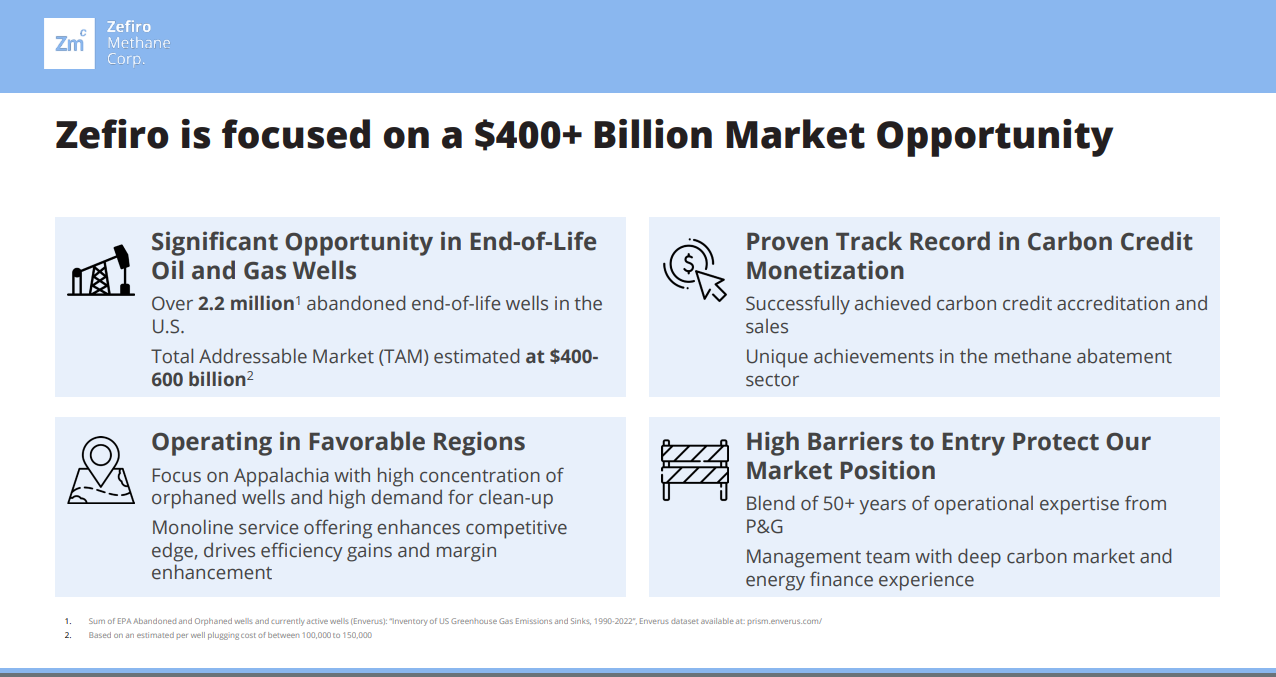
The economic logic behind Zefiro is quite simple: As long as orphaned oil and gas wells are not properly plugged, they remain a problem for owners, authorities, and, in some cases, new infrastructure. According to ATB Cormark's estimates, there are more than 3 million non-producing wells in the US, of which approximately 1.5 million have not yet been plugged; analysts estimate that the complete remediation of these open wells alone could require more than USD 1 trillion in capital. This makes it clear that the frequently cited USD 4.7 billion in government subsidies covers only a small fraction of the actual problem. Zefiro is therefore not addressing a short-term production trend, but rather a remediation backlog that has built up over decades, the resolution of which is increasingly being driven by regulation, owner obligations, and new land use. The key point for investors: as energy infrastructure expands, not only does the pressure to remediate increase, but so does the economic willingness to have this work carried out professionally and on schedule.
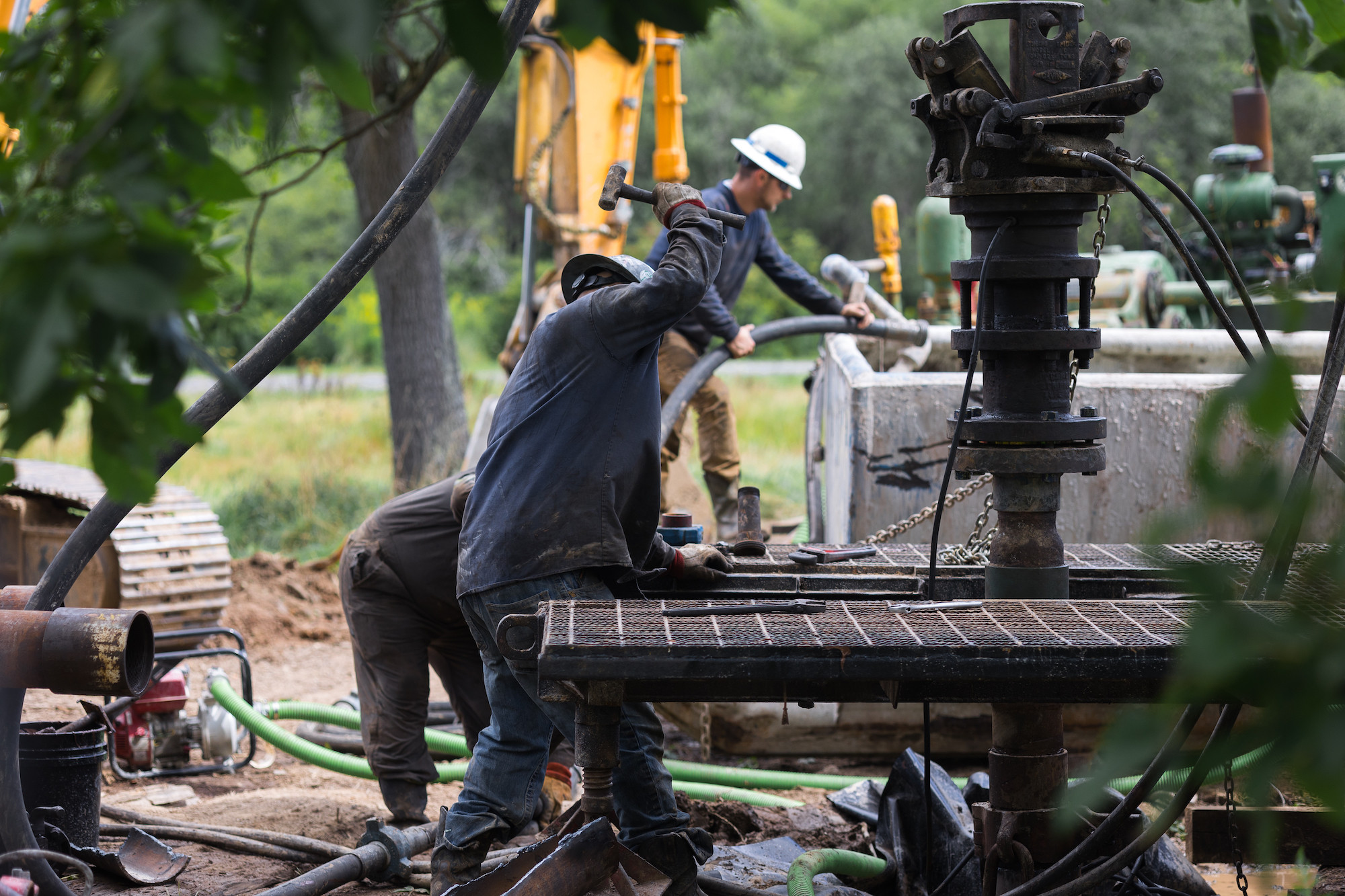
From Wellbore to Verification: Zefiro Is Building a Fully Integrated Industrial Platform
The company's true strength lies less in any single technology than in the unusually high level of vertical integration of its operations. According to Cormark, Plants & Goodwin can handle key steps in the plug-and-abandonment chain in-house, from drilling rigs and cementing to wireline services and specialised equipment, and through to maintenance and engineering. According to the research firm, Zefiro has over 25 rigs of various sizes, its own cementing infrastructure, 14 wireline units, and extensive additional operating equipment. This reduces dependence on external subcontractors while improving planning, capacity utilisation, and cost control. Added to this is Plants & Goodwin's more than 50 years of experience in the Appalachian region, which represents a practical competitive advantage, particularly when dealing with older wells with incomplete historical data. From Cormark's perspective, this creates a barrier to entry that small regional competitors will find difficult to replicate.
New USD 11.5 Million Contract Boosts Revenue Visibility
The latest contract announcement lends additional substance to the growth thesis and is therefore more than just another isolated announcement. In early September, Zefiro received a state-funded contract worth USD 11.5 million from a state environmental protection agency in the Great Lakes region, scheduled for completion between November 2026 and June 2029. Approximately USD 3 million must be recognised between November 2026 and the end of June 2027, with the additional USD 8.5 million then scheduled through June 2029. This new contract thus complements the existing USD 19.6 million Ohio contract and adds another substantial component to the multi-year order backlog. What is particularly valuable here is not only the contract value but also the opportunity to utilise rigs and crews in a targeted manner over a longer period, thereby better controlling mobilisation costs, downtime, and seasonal fluctuations.
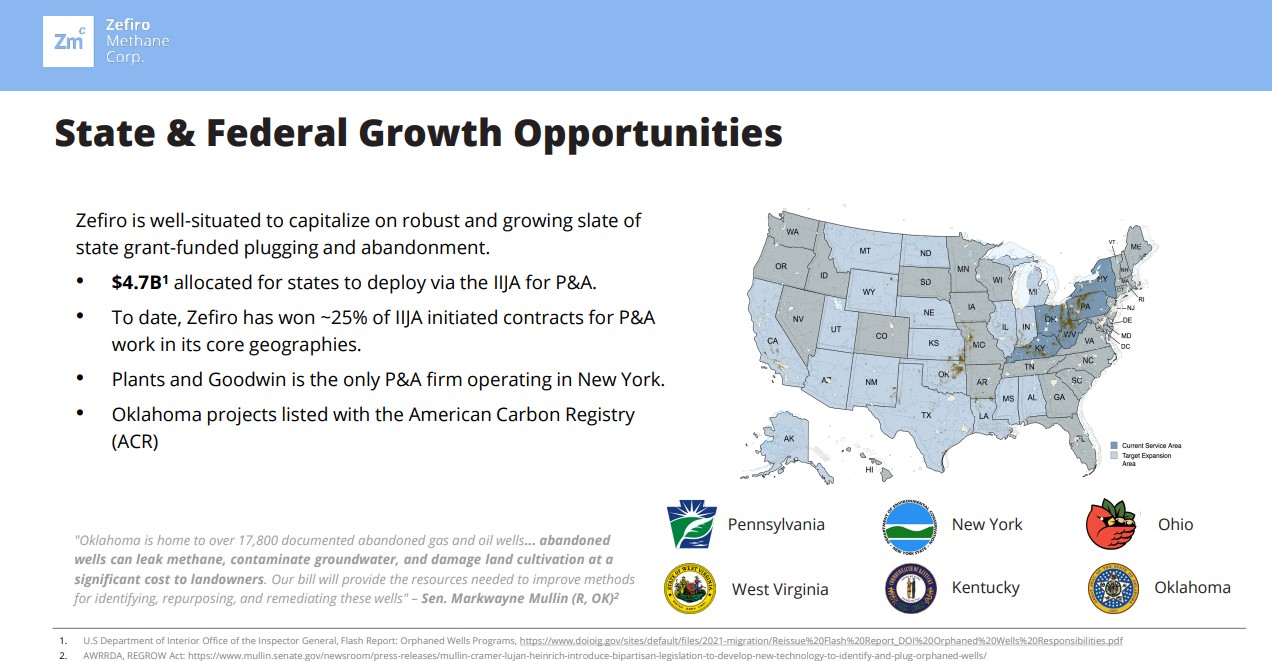
Multi-Year Contracts Are Becoming the Foundation for the Next Phase of Growth
In addition to government programs, business with private oil and gas companies is increasingly developing into a second stable pillar. Operators are outsourcing the decommissioning of wells that are no longer needed because it frees up their own capital, personnel, and technical resources for ongoing production and new projects. The research firm Cormark points out that once successfully established, such customer relationships can be exceptionally long-lasting because technical expertise, regional well knowledge, and reliable project execution create high barriers to switching. Of particular interest is the collaboration with larger producers, whose extensive well portfolios generate recurring remediation needs over many years. Zefiro thus combines three different sources of demand: private operators, government-funded orphan well programs, and, in the future, more standardised projects related to new energy infrastructure.
The Data Business: The Key Margin Lever Lies Behind the Scenes
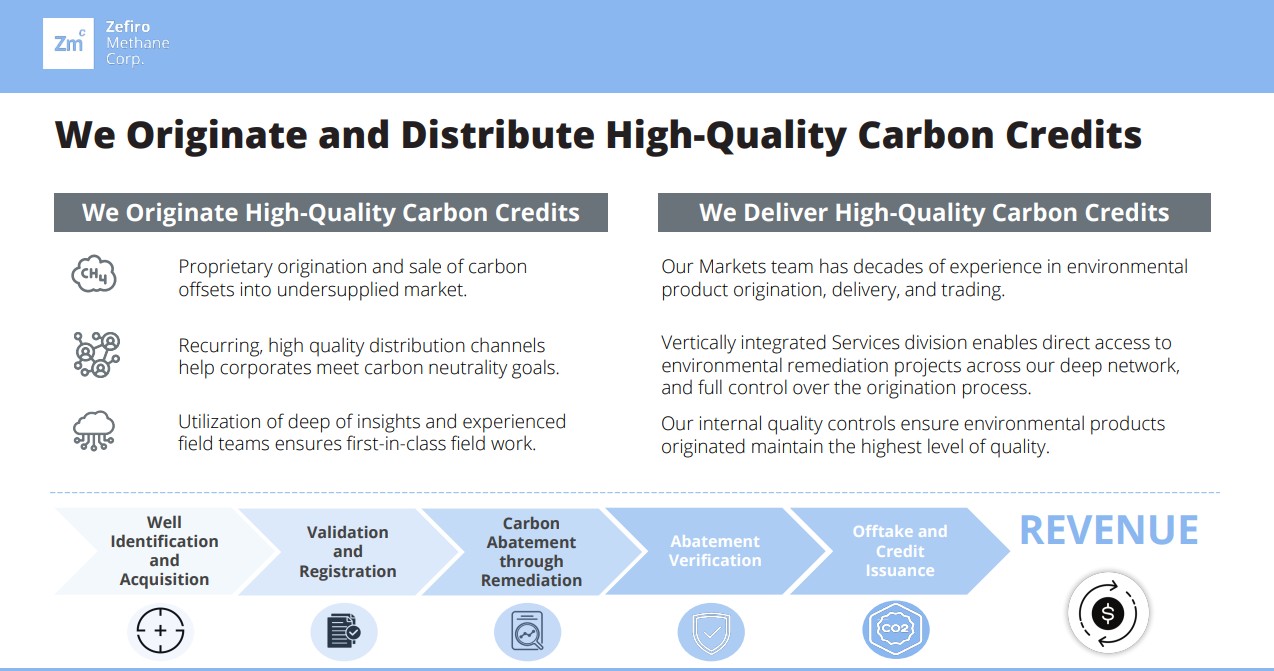
Zefiro thinks bigger than just the plugged well. The company aims to control the entire value chain—from precisely measuring escaping emissions through remediation to certified verification of the savings achieved. A 15,000-foot-deep gas well in Custer County, Oklahoma, demonstrates just how scalable this approach could be. There, the project generated verified emission reductions of 92,956 metric tons of CO₂ equivalent. What makes this project unique is that these are the first certified carbon offsets from a decommissioned "orphan well" in accordance with the relevant methodology of the American Carbon Registry. In doing so, Zefiro is not only setting a precedent but also establishing a robust benchmark for the future commercialisation of additional projects. This data-driven strategy is already generating business, as shown by approximately USD 850,000 in revenue from methane monitoring for the West Virginia Department of Environmental Protection. Zefiro has long since moved beyond simply selling remediation services—it now also sells actionable emissions data. The more professional the market for verifiable climate impact becomes, the more valuable this treasure trove of data will be. Each remediated well can therefore generate not only one-time project revenue but also a long-term, usable dataset—and with it, an additional, scalable revenue stream.
When AI Needs Power, Contaminated Sites Become a Location Advantage
The AI boom is generating demand not only for computing power but also for energy, power lines, and immediately available grid connections. This is bringing decommissioned oil and gas sites into the spotlight. Only once abandoned wells have been properly plugged and contaminated sites remediated can new power plants, substations, or other energy-intensive infrastructure projects be built there. Zefiro recognised this opportunity early and has already implemented remediation projects in Pennsylvania and Louisiana alongside new energy infrastructure. The company therefore benefits from the momentum of electrification and AI without having to develop data centres, turbines, or battery storage systems itself. The logic is strategically interesting: the scarcer suitable sites with existing energy and grid access become more valuable as remediation of orphaned well contamination sites becomes more difficult.
The scale of this trend is substantial. According to current forecasts by the International Energy Agency, global electricity consumption by data centres is expected to more than double to approximately 945 terawatt-hours by 2030. In the US, data centres could account for nearly half of the total growth in demand, while natural gas is likely to play a central role in meeting the additional electricity supply there. The partnership with the Well Done Foundation could also accelerate Zefiro's growth. It gives the company access to a significantly larger project portfolio in the US while also increasing its visibility among government agencies, infrastructure developers, and potential clients. This shifts Zefiro's role from a provider of remediation services for abandoned wells to a potential trailblazer for new energy projects. After all, before additional power plant capacity and grid connections can be established, space must first be created—and that is precisely where Zefiro's business begins.
Investment Highlights
ZEFIRO METHANE (CAD 0.69 | NEO:ZEFI | WKN: A3DVHU | ISIN: CA98926D1069)
- Specialist in the decommissioning of abandoned oil and gas wells in the US—a market with an estimated volume of USD 400 to 600 billion
- Integrated business model combines well remediation, methane measurement, environmental services, and the generation of high-value carbon credits
- More than 2 million abandoned oil and gas wells in the US create a long-term, structural growth market
- Dynamic revenue growth with expected revenues of over USD 40 million in fiscal year 2025/26
- Positive EBITDA trend demonstrates that the operating business can already be scaled profitably
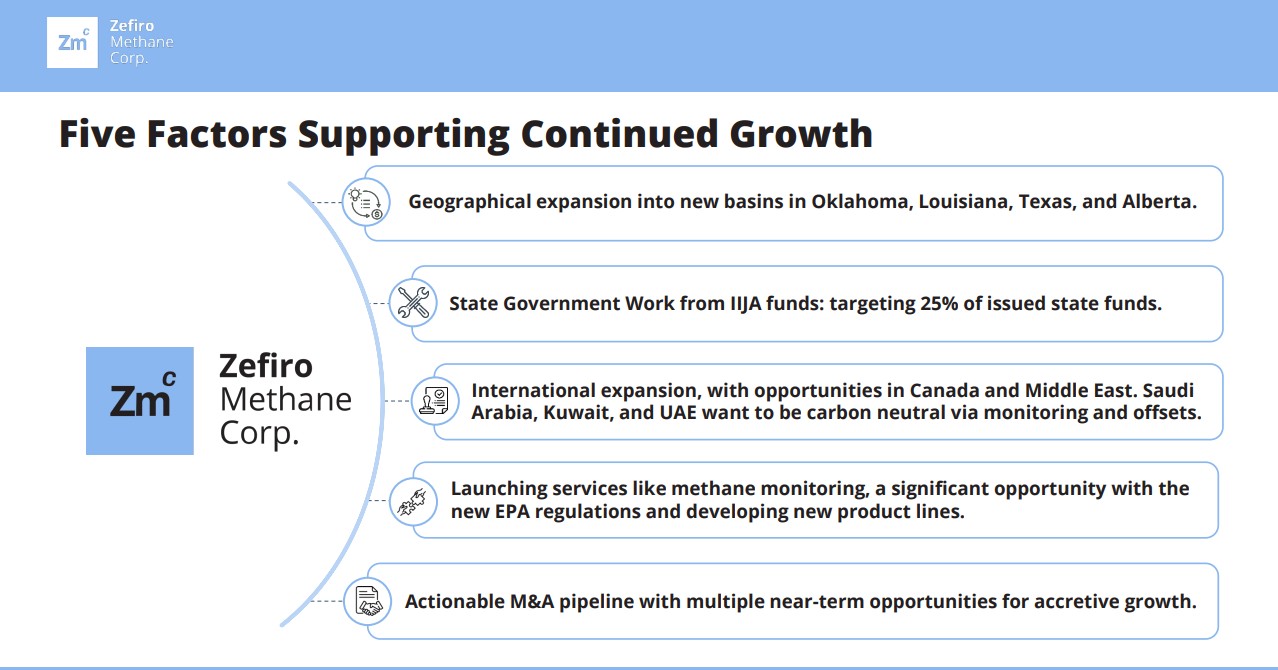
- Strategic acquisitions expand the fleet, workforce, and regional presence, further increasing the annual revenue base
- New major contracts from the US infrastructure program ensure high visibility and a well-filled order book
- AI data centres and the multi-billion-dollar expansion of US energy infrastructure open up an additional growth segment
- Methane measurement and certified emissions credits are developing into high-margin revenue pillars with significant scalability potential
- The world's first methane emissions credits certified according to the American Carbon Registry standard provide a key competitive advantage
- A strategic partnership with the Well Done Foundation opens access to projects in up to 18 US states and sustainably strengthens the market position
- New USD 11.5 million contract increases revenue visibility
- Market capitalisation at micro-cap level, but with millions of US dollars in revenue
Research Update: GBC and Cormark See Significant Upside Potential
With GBC Research and ATB Cormark, two research firms have now independently taken up Zefiro's capital market case—using different valuation approaches but sharing a fundamentally positive assessment. In its previously published analysis, GBC arrives at a price target of CAD 2.12, seeing potential for an increase of more than 200% relative to the price level at that time. Cormark is initially more cautious with a price target of CAD 1.00, but also assigns an "Outperform" rating and sees the stock on a clear path to appreciation if operational execution is successful. Cormark's model assumes an EV/EBITDA multiple of 7.4 and significantly improved free cash flow for 2028. Notably, Cormark does not factor future major acquisitions or a substantial value contribution from the carbon credit business into its base price target. Both areas are explicitly considered additional upside potential. GBC, by contrast, assumes the Viking rigs acquired in May 2026 will generate an additional annual revenue of a conservatively estimated USD 8.0 million starting in fiscal year 2026/27, following their full integration into the organisation. For the high-margin carbon credit business, a conservative restart of USD 0.60 million is expected starting in the second half of the year after the revised ACR methodology is introduced in the fall of 2026. Finally, for fiscal year 2027/28, experts anticipate an expansion of the project portfolio in this voluntary CO₂ market, which is expected to increase revenue in this sub-segment to USD 2.50 million as planned.
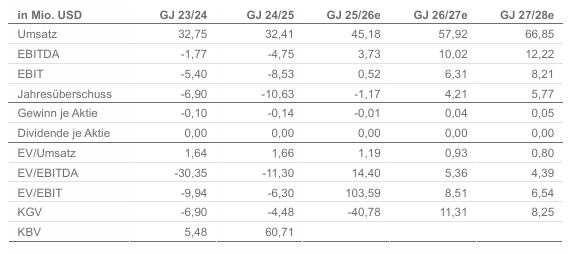
This paints a two-sided picture: GBC already takes a significantly more aggressive view of the expected profit trend, while Cormark adopts a more conservative approach and places greater emphasis on the actual operational turnaround. Operationally, Zefiro has shown in recent quarters that market opportunities can translate into revenue and earnings. In the first nine months of fiscal year 2025/26, revenue rose to approximately USD 33.2 million, while EBITDA turned positive to USD 3.1 million, significantly exceeding the prior-year level. For the full year, Cormark expects revenue of USD 41.6 million and adjusted EBITDA of USD 1.4 million. Cormark already anticipates revenue of USD 53.3 million for 2027 and an increase in EBITDA to USD 12.2 million by 2028, corresponding to an adjusted EBITDA margin of just under 20%. In addition, the research firm sees opportunities for further acquisitions, particularly if these allow the company to acquire established customer relationships and immediately realisable revenue. In an M&A scenario, Cormark even calculates target prices of approximately CAD 1.04 to 1.22, depending on the size of the transaction. For investors, this makes the coming months extremely exciting.
Conclusion: From Plugging Abandoned Wells to a Scalable Infrastructure Play
Current forecasts show Zefiro on a clear path to expansion, with management projecting revenue of around USD 55 million for the new fiscal year, and the additional capacity from the Viking acquisition playing a key role. At the same time, public awareness of the orphan well issue continues to grow, as demonstrated by recent coverage in the Bradford Era and the new 25-minute documentary "The Hazard Below", which brings Zefiro's operational work and the scale of the problem to a wider audience.
Please note that Canadian regulators classify the video as "advertising" for the company. Click here to watch the insightful documentary featuring IIF host Lyndsay Malchuk.
In a relatively short period of time, Zefiro Methane has evolved from a speculative carbon play into a much more tangible operational infrastructure company. The key shift is that the focus is no longer on a future carbon market vision, but on a growing core business with government and private-sector clients, proprietary equipment, and long-term contracts. The new USD 11.5 million contract underscores this development and increases visibility through 2029. At the same time, models from GBC and Cormark show that further improvements in capacity utilisation and margins could generate significant earnings leverage. Particularly attractive is the combination of an already valuable operating business and several options not yet fully priced in—such as M&A, further regional expansion, and the collection of carbon credits.
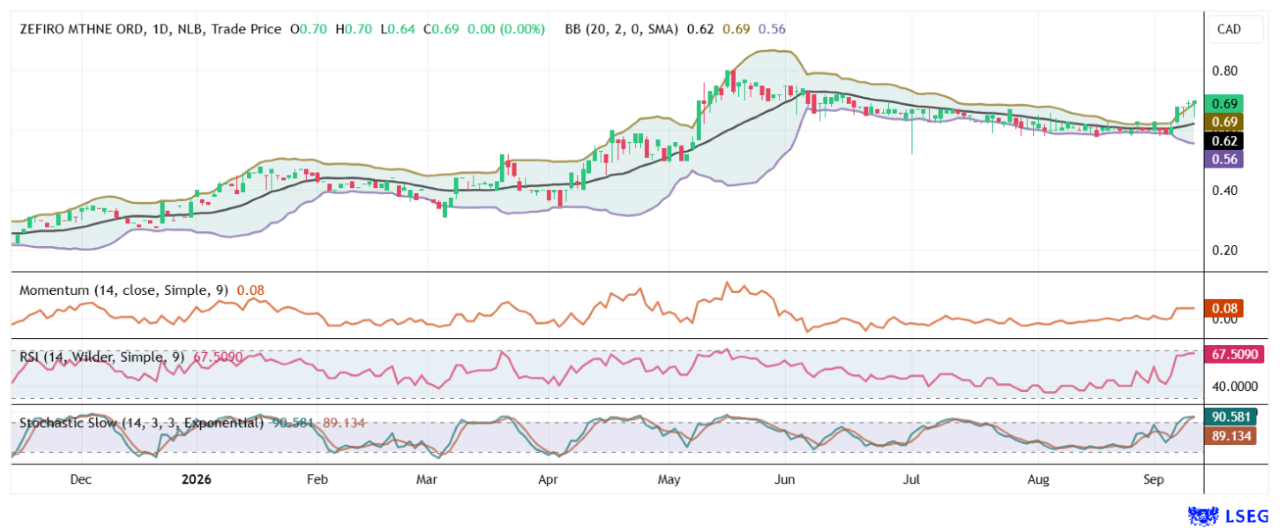
Zefiro is not a traditional oil and gas stock and should therefore not be evaluated by the standards of a conventional production company. Companies like Shell, BP, TotalEnergies, or Petrobras earn well primarily when production volumes, margins, and commodity prices align. Their business performance therefore remains closely tied to oil market volatility and geopolitical shocks.
Zefiro's business model operates at a different point in the value chain. Instead of relying on the next spike in crude oil prices, the company earns revenue from decommissioning, rehabilitating, and monitoring orphaned wells—a task that is becoming increasingly important regardless of short-term oil prices. Should the conflict with Iran eventually ease and oil prices decline, this difference could become particularly evident. While traditional producers would then have to expect declining revenues, Zefiro's growth thesis would remain largely intact. The key driver of its share price would not be the commodity price, but rather the ability to generate recurring contracts, IPO proceeds, and additional sources of revenue from a growing need for well rehabilitation.
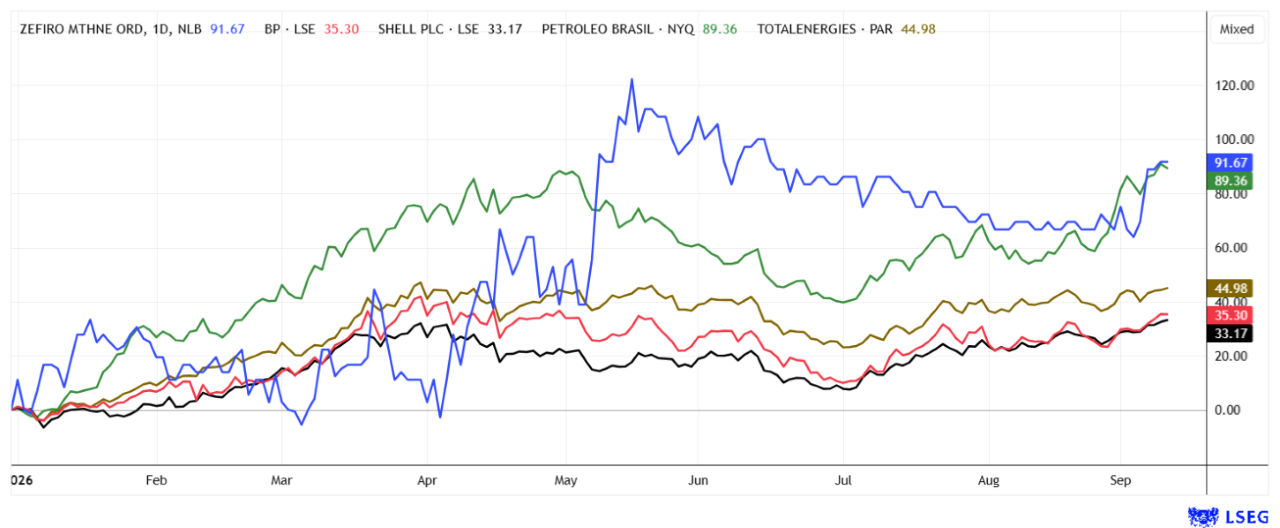
With rising revenue, positive EBITDA for the first time, multi-year major contracts, and expansion into additional US states, Zefiro is increasingly laying the operational foundation for a sustainable revaluation. The growing order volume is providing greater visibility, while the expansion into higher-margin segments such as methane measurement technology and carbon credit monetisation is opening up additional revenue potential. At the same time, the research firms GBC and Cormark, with price targets of CAD 2.12 and CAD 1.00, respectively, emphasise that the capital market believes the company is worth significantly more than its current market capitalisation of CAD 62.5 million. Should Zefiro continue the announced growth in revenue and profitability, the gap between its operational performance and its share price could increasingly narrow.
IIF host Lyndsay Malchuk speaks with CEO Catherine Flax about the growing threat of methane emissions and the company's further expansion plans.
This update follows the initial report dated July 17, 2026. Click here for the analysis.