
From Producer to Industry Leader: Almonty Is Building the West's Strategic Tungsten Champion
The daily news provides the proof! The global race for critical raw materials is entering a new phase, and tungsten is emerging as one of the most important strategic metals of all. As China continues to tighten its export policies and Western nations invest billions in defense, semiconductor manufacturing, and industrial sovereignty, investors' focus is shifting increasingly toward companies that can deliver in the short term. What matters most today is no longer just the size of a deposit, but the ability to supply Western industries with conflict-free material on a long-term basis. This is where Almonty Industries (WKN: A414Q8 | ISIN: CA0203987072 | Ticker: ALI/ALM) comes in, achieving a series of operational milestones within just a few weeks that are fundamentally transforming the nature of the company. Step by step, a mining developer with years of experience is evolving into a globally significant producer with predictable cash flows, long-term supply contracts, and growing strategic importance for the West's supply of raw materials.
Sangdong Delivers: The Billion-Dollar Project Becomes a Cash Flow Machine
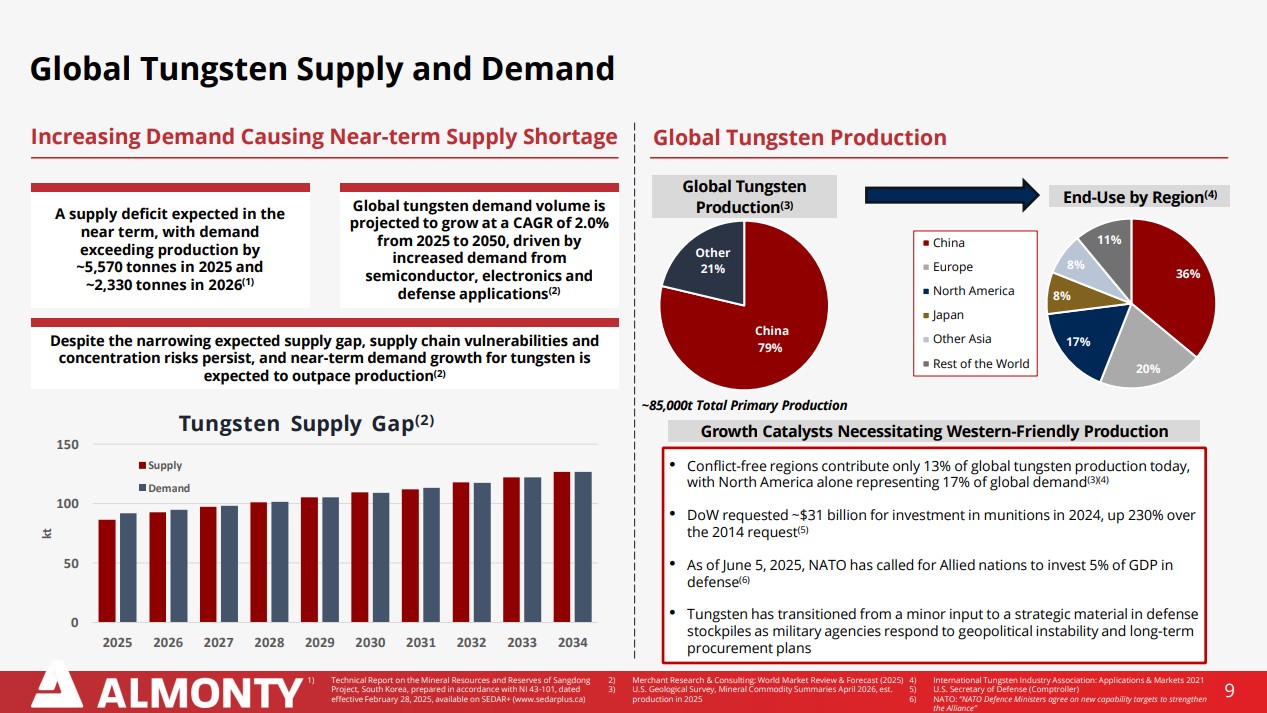
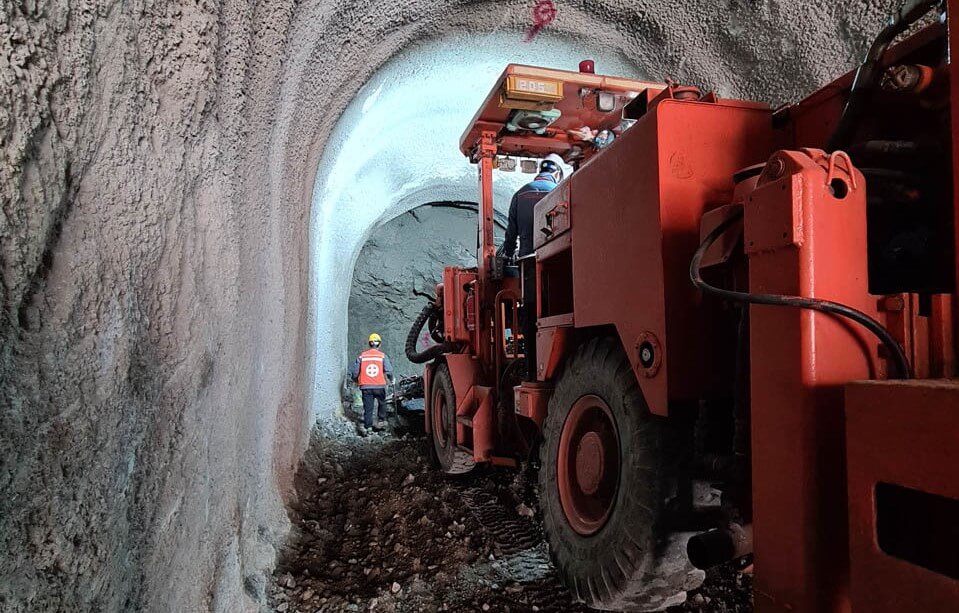
With the start-up of the processing plant at the Sangdong Mine in South Korea in early July, Almonty cleared what is perhaps the most significant hurdle in its corporate history. For the first time, mined ore is being continuously processed into marketable tungsten concentrate, marking the project's definitive transition from the development phase to commercial production. For the ramp-up, the company is drawing on a stockpile of approximately 139,700 metric tons of ore with an average grade of about 0.25% WO₃, which will sustain operations during the initial production phase for about 2.6 months and corresponds to a calculated metal value of approximately USD 68 million. During commissioning, the company is deliberately processing lower-grade material to optimally coordinate ore processing, blending ratios, and metal recovery before gradually developing higher-grade areas of the deposit. Even this start-up material already exhibits ore grades that are approximately three times higher than those of the Panasqueira mine in Portugal, underscoring the project's exceptional economic potential.
With every kilogram of tungsten produced, the company's perception in the capital market changes as well. For many years, Almonty was valued primarily based on its project development; in the future, however, revenue, operating margins, and free cash flow are likely to determine its valuation metrics. The timing could hardly be more favourable, as tungsten prices remain near historic highs and are meeting a market where supply outside of China is extremely limited. While numerous competitors still need to secure permits, financing, or move forward with mine construction, Sangdong is already producing marketable concentrate, giving Almonty a significant head start. A long-term vision is thus increasingly taking shape as a producing commodities company, whose profitability should now become apparent quarter after quarter.
21 Years of Planning Certainty: The GTP Contract Sets New Standards
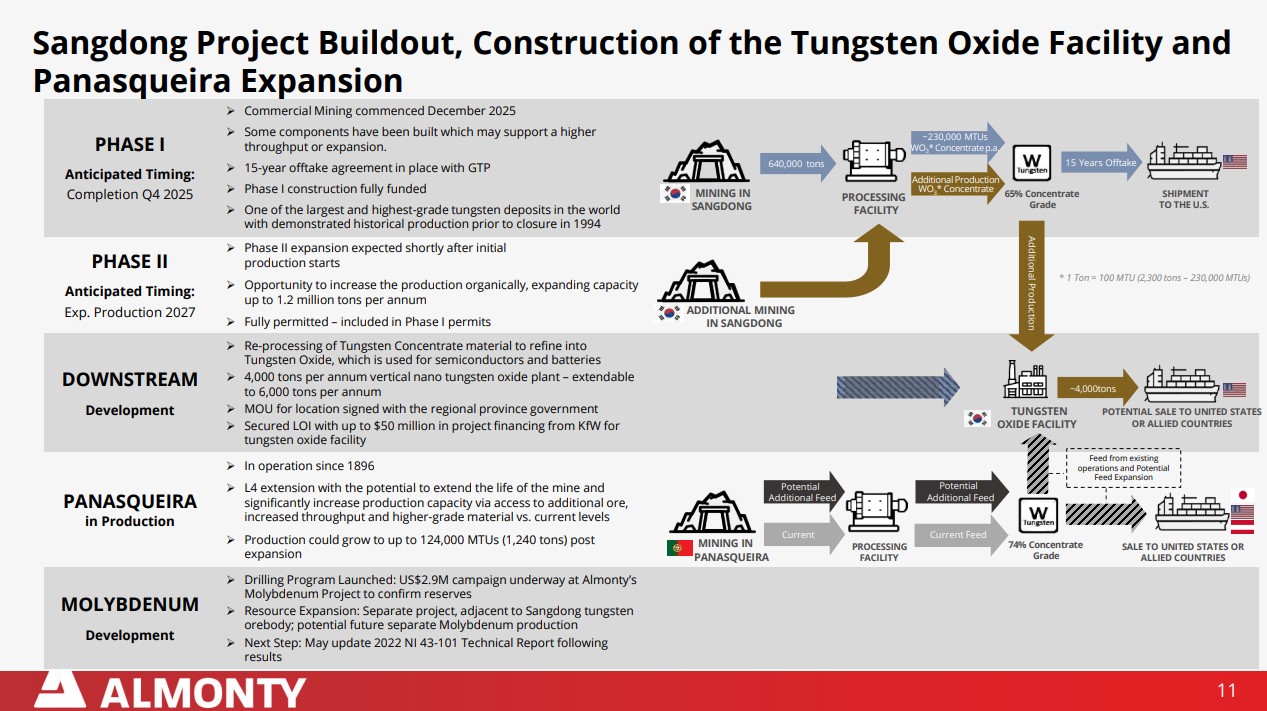
Even more significant than the start of production, however, is the quality of future revenues. Just a few days after commencing processing, Almonty announced a significant expansion of its long-term offtake agreement with Global Tungsten & Powders (GTP), a company within the Austrian Plansee Group and one of the most important suppliers to the US defense and high-tech industries. The contract term has been extended from the original 15 years to 21 years, and the contractually bound supply volume has increased by 40% to 4.41 million MTU. In addition, the price basis for all supply volumes has improved by approximately 6.3%, raising the expected annual contract revenue, based on current APT prices, to approximately USD 490 million. The improved terms alone represent additional revenue potential of approximately USD 30 million per year, or around USD 630 million over the entire contract term.
It is particularly noteworthy that this agreement applies exclusively to approximately 90% of the production from Phase I of the Sangdong Mine. Neither the planned second expansion phase with significantly higher throughput nor additional production capacities from Portugal, Spain, or the US projects are included in this agreement. Thus, despite the exceptionally high level of revenue certainty, Almonty continues to have considerable growth potential beyond the volumes already contracted. At the same time, the combination of long-term minimum purchase commitments and a pricing structure that allows for participation in rising tungsten prices significantly reduces dependence on short-term market cycles. In an industry where revenues traditionally depend heavily on spot prices, this creates an exceptionally stable business model with high visibility spanning decades. And this does not even take into account the long-term prospects of including molybdenum.
Lewis Black, CEO and President of Almonty, stated: "GTP and the Plansee Group have been backing the Sangdong mine since 2018, and this contract amendment reflects both the strength of this partnership and the value that conflict-free tungsten from the Sangdong mine holds in today's market. The extension of the term to 21 years reflects the longevity of this project. The 40% increase in contractually agreed volumes and the approximately 6.3% rise in expected annual revenue provide Almonty with a depth of revenue forecasts that no other producer in our industry can match. Equally important is that the improved prices directly impact the volumes we are already contractually obligated to deliver—at currently expected APT prices, additional revenue of at least USD 30 million per year is anticipated, totaling approximately USD 630 million over the term of the amended agreement, precisely at the time when Sangdong reaches full production in a tungsten market at historic highs."
Montana Takes Center Stage: The US Reserve as a Long-Term Growth Step
In addition to South Korea, the US project pipeline is also gaining increasing importance. The Gentung Tungsten Project in Montana could serve as another pillar of Western supply in the long term and holds particular strategic importance, especially in light of US resource policy. The latest exploration results from the immediate vicinity underscore the region's geological potential. At the Pioneer Tungsten Project, numerous samples with significantly elevated tungsten values were identified, including peak values of over 3,000 ppm WO₃. It is highly significant that the mineralization exhibits characteristics comparable to those of the nearby Gentung structures, thereby confirming the importance of the entire district for future tungsten production.
Historically, Montana has already been linked to strategic tungsten mining in the US. Earlier production phases in the 1950s and 1970s show that the region was already utilized as an important source during previous commodity shortages. Today, this location is taking on new significance due to the growing demand for non-Chinese supply chains. For Almonty, Gentung could thus represent a strategic complement to Sangdong in the long term and further strengthen its position as a Western supplier. The combination of South Korean production, a Portuguese base, and an American project pipeline creates a diversified production network that is increasingly valuable in the critical raw materials sector.
Institutional Capital Sends a Clear Signal for the Future
In parallel with its operational progress, Almonty is also consistently expanding its position in the capital markets. The USD 700 million convertible senior notes issued in June were significantly oversubscribed, resulting in the full exercise of the over-allotment option and raising approximately USD 773 million for the company after deducting all costs. With this capital, Almonty now has an exceptionally strong balance sheet to drive the expansion of the Sangdong mine, planned tungsten oxide production and other international growth projects, independent of short-term market cycles. The high demand from institutional investors also underscores that Almonty is now attracting attention far beyond the circle of traditional commodities specialists. Today, investors are no longer investing solely in a mine, but in the development of a key Western platform for a strategic commodity whose geopolitical significance is growing quarter by quarter.
This revaluation is also reflected in the company's inclusion in the major Russell 1000 and Russell 3000 indices. As a result, Almonty now meets the strict market capitalization criteria of the largest publicly traded US companies and automatically becomes a component of numerous institutional index funds and benchmark-oriented investment mandates. For many large asset managers, this made the stock investable for the first time, significantly broadening the potential investor base. At the same time, index inclusion improves trading liquidity in the long term and is likely to lead to a more stable shareholder structure with a higher proportion of institutional investors.
Focus on the Nasdaq: Almonty Consistently Pursues an International Strategy
Against this backdrop, the decision to voluntarily delist from the Toronto Stock Exchange at the end of July and to concentrate trading exclusively on the Nasdaq in the future also makes sense. Already today, the vast majority of daily trading volume takes place on the US exchange, while a dual listing incurs additional administrative and compliance costs. By concentrating liquidity on a North American exchange plus Germany, management expects more efficient capital market structures and even greater visibility among international investors. Operationally, nothing will change for existing shareholders, as Canadian brokers will continue to facilitate trading on the Nasdaq. Strategically, however, this step underscores the company's commitment to aligning itself even more closely with the largest international capital markets and the needs of US institutional investors in the future.
Overview of Catalysts for the Near Future
- Phase 1: Commissioning and ramp-up at the Sangdong mine in South Korea are proceeding according to plan
- Phase 2: Increase in mill capacity or construction of a new facility to a target of 1.2 million MTU per year
- Tungsten: 21-year offtake agreement signed with GTP (US)
- Potential increase in output from the Panasqueira mine in Portugal to up to 300,000 MTU
- Molybdenum drilling program launched
- Processing of tungsten concentrate into tungsten oxide, which is used in semiconductors and batteries
- LOI for downstream project financing of USD 50 million with KfW
- Low production costs estimated at USD 126.80 per MTU (APT) - Current market price > USD 3,000
- Production in the US: Reactivation of the historic Gentung Mine in Montana
- Inclusion of molybdenum as an additional source of cash flow in South Korea
Analysts See Significant Potential: Production Becomes the Key Valuation Driver
Analysts are also responding to the operational momentum with raised expectations. Following the successful start of production, Cantor Fitzgerald reaffirmed its "Buy" rating and sees further upside potential with a price target of USD 25.50. D.A. Davidson is even more optimistic; following discussions with CEO Lewis Black, it raised its price target to USD 33, factoring in both higher tungsten prices and progress at Sangdong and the additional projects. Analysts expect Almonty's annual production, currently around 58,000 MTU from the Panasqueira mine in Portugal, to rise to over 300,000 MTU as early as 2026 and reach approximately 640,000 MTU in 2027. At the same time, despite cautious long-term price assumptions of USD 1,750 per MTU for 2027, D.A. Davidson projects revenue of approximately USD 804 million and adjusted EBITDA of nearly USD 700 million. These forecasts highlight the enormous operational leverage of the business model once production, metal prices, and yield reach their full potential.
Conclusion: The Investment Story Reaches a New Dimension
The past few weeks mark a turning point that few commodity companies achieve in such a short time. With the transition to commercial production, the significantly expanded long-term contract with GTP, the exceptionally strong financing, inclusion in key US indices, and the consistent focus on the Nasdaq, the investment story is fundamentally changing. At the same time, the structural tailwind for tungsten remains intact, as the defense, semiconductor, aerospace, and high-tech sectors need secure supply chains outside of China more than ever. Phase II in Sangdong, the planned tungsten oxide production, the molybdenum project, and further developments in Portugal, Spain, and Montana have so far been only partially factored into many valuation models, opening up additional potential. Almonty is thus increasingly evolving from a successful mining operator into a strategic commodities company whose economic and geopolitical significance continues to grow with every kilogram of tungsten produced.
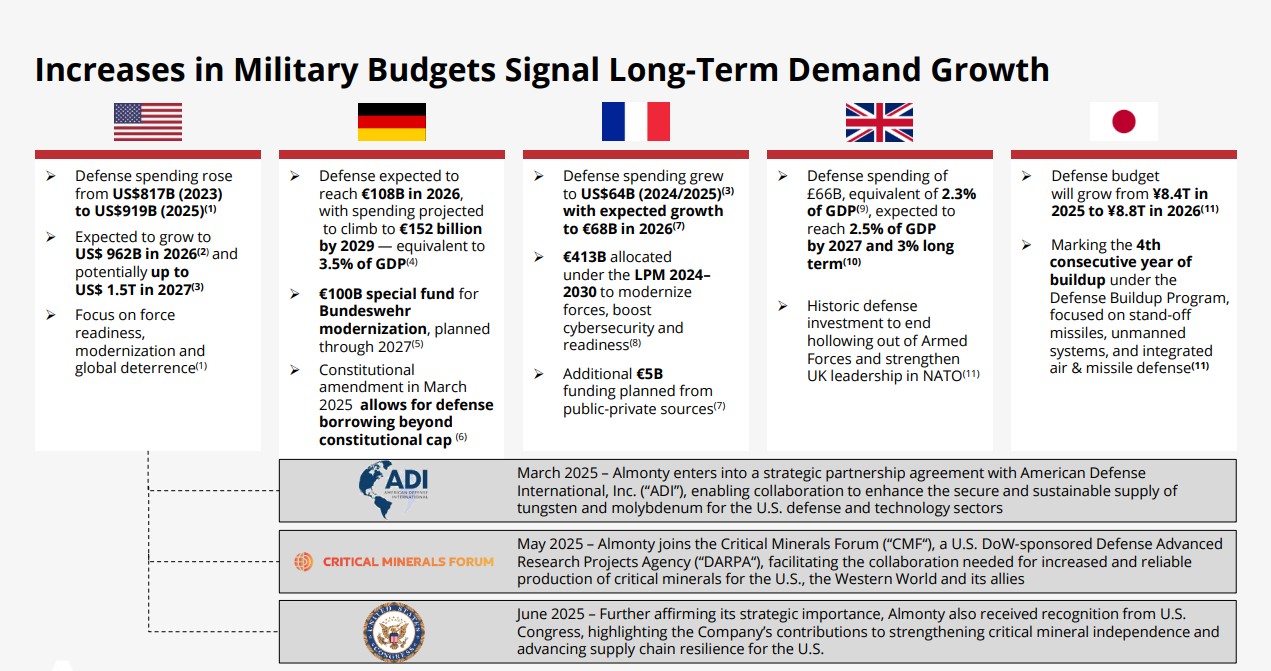
Major defense budgets are undergoing a complete overhaul! The NATO summit in Ankara demonstrated that Europe has recognized the signs of the times and will rely more on its own defense capabilities than on transatlantic support in the future. The Bundeswehr's participation in the first French nuclear exercise last week also underscores this reorientation. The fact that Germany now also intends to deploy additional Tomahawk missiles will take the demand for tungsten to a whole new level in the coming months. Under these circumstances, it seems highly unlikely that the current record-high price of tungsten (APT) will change in any way.
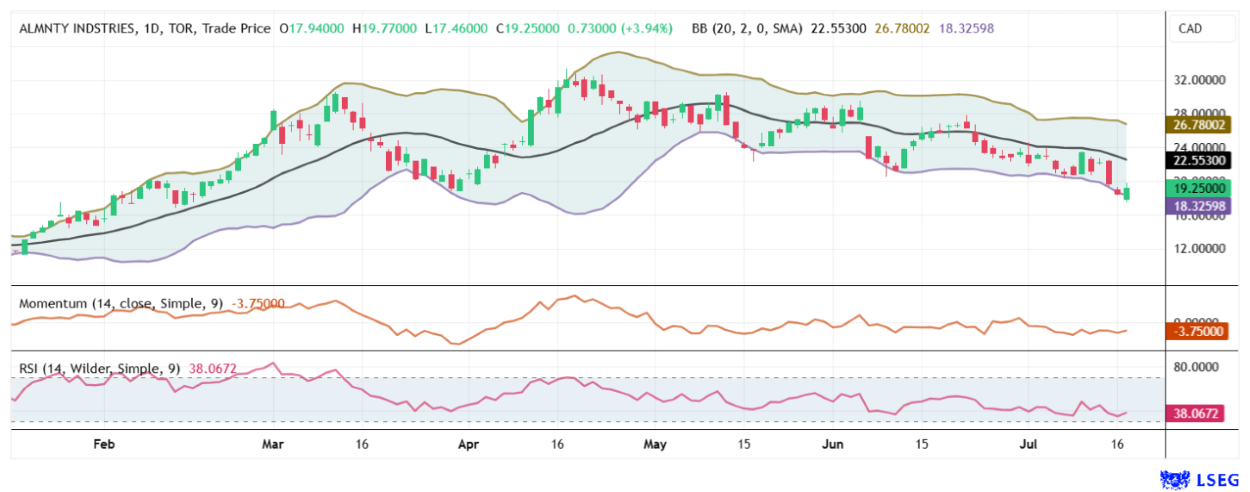
Risk-tolerant investors should view the current consolidation in major commodity stocks as a buying opportunity. Almonty's stock is encountering a resilient technical support zone in the range between CAD 18 and 22, while momentum and RSI are already signaling the first signs of a bottom forming. Price targets around CAD 30, a full 50% above the last price, reflect this scenario and appear well within reach over a 12-month horizon. However, against the backdrop of further escalating geopolitical tensions, these targets seem more conservative than ambitious. Another reason for this well-timed entry is the forced liquidations at South Korean brokerages. Private speculators, in particular, have gone too far in the AI chips and high-tech sectors and are being forced to close their accounts due to excessive leverage. For the much more developed Western markets, this represents a classic "buying opportunity" in solid stocks like Almonty Industries.
The basic thesis still holds: Those who secure access to critical raw materials today are not only positioning themselves along the industrial value chain but are also tapping into geopolitically driven scarcity premiums. Traditional valuation metrics are increasingly taking a back seat—while security and supply-chain factors are noticeably gaining in importance.
Click here for the latest video featuring CEO Lewis Black and IIF host Lyndsay Malchuk from the 19th International Investment Forum.
This update builds on our initial report 12/2021.