
Oil Contamination Sites as a Gold Mine: The Lucrative Formula of Modern Environmental Infrastructure
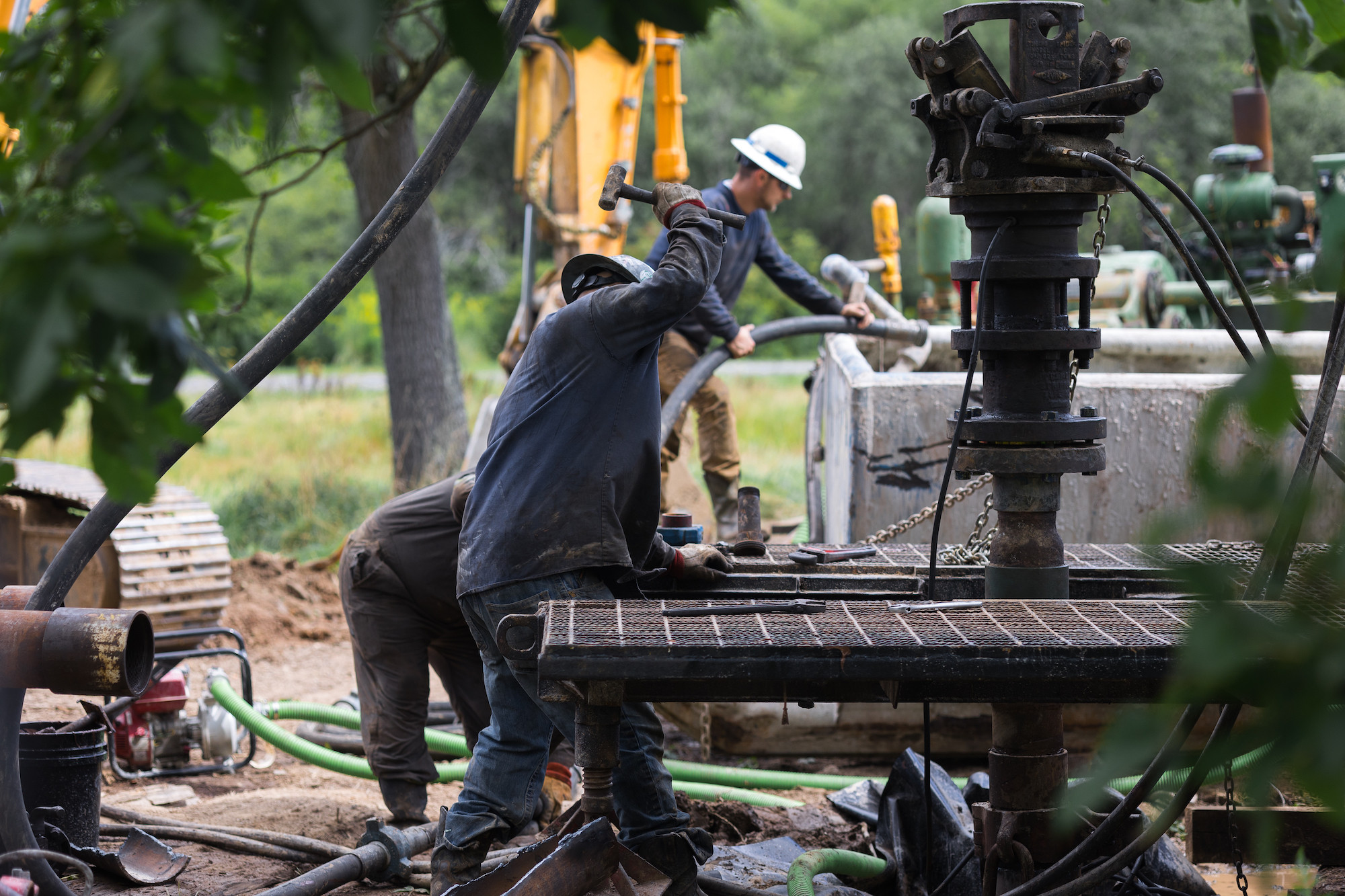
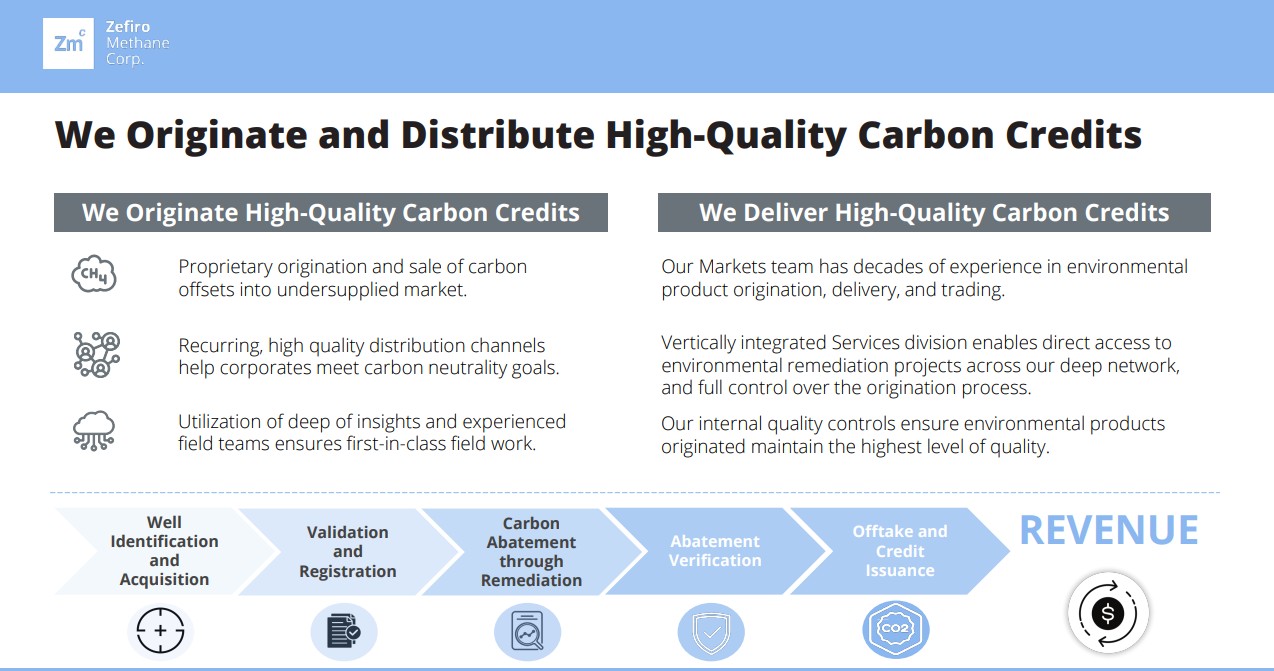
Zefiro Methane is revolutionizing the outdated North American remediation sector and transforming millions of abandoned and orphaned, environmentally harmful wells into a highly profitable cash cow. The company deliberately distances itself from the traditional small-business model. Instead, it orchestrates the entire value chain on its own. Its operational spectrum ranges from heavy-duty technical cementing to data-driven high-tech emissions measurements and the lucrative generation of certified carbon credits. Through this uncompromising vertical integration, the small-cap company simultaneously generates multiple, independent revenue streams via government funds worth billions, industrial customers, and the CO₂ certificate market. In light of stricter ACR climate regulations taking effect in the fall of 2026, this turnkey, all-in-one solution will become the indispensable standard for government agencies and energy companies. This ensures that the industry pioneer will experience an explosive surge in demand for the 2026/27 fiscal year and make a direct leap into profitability.
Environmental Time Bomb as a Growth Driver: Zefiro on the Path to Profitability
"The expansion turbo is kicking in."
A recent analysis by the National Science Review exposes unsealed wells worldwide as ticking climate bombs and massive, underestimated sources of methane. Without radical countermeasures, the atmosphere faces a burden of nearly 10 million metric tons of this highly climate-damaging gas by 2050. Proper plugging could immediately stop well over half of these emissions. In the US alone, an environmental legacy of over 2 million abandoned wells awaits closure. This significantly increases the political pressure to act and creates a long-term remediation market worth several hundred billion US dollars. Within this massive market segment, Zefiro Methane is rapidly advancing its geographic expansion. This aggressive scaling is directly reflected in the current financial forecasts from the research firm GBC. Analysts expect a massive jump in revenue to approximately USD 45.2 million for fiscal year 2026/27. The drivers of this growth are the significantly increased drilling rig capacity and new large-scale government contracts, which are catapulting the company directly into operational profitability.
Zefiro Demonstrates the Scalability of Its Business Model
The latest financial results impressively underscore that the strategic scaling of the operational platform is taking full effect. Already in the first three quarters of fiscal year 2025/26, Zefiro catapulted its revenue to approximately USD 33 million. In doing so, the company significantly surpassed the previous year's level and kept adjusted EBITDA stable in the black. For the full year, management is forecasting revenue of over USD 40 million. This forecast is fundamentally underpinned by a wave of newly won contracts. At the same time, the company invested aggressively in expanding its own specialized fleet and heavy equipment to tap into new US states at record speed. This synergy of organic growth, strategic acquisitions, and a well-stocked project pipeline paves the way for the next wave of expansion. If the strong momentum in order intake continues, the utilization of the expanded drilling fleet will provide additional margin leverage in the coming years.
The Data Moat: How High-Tech Analytics Multiplies Operating Margins
Zefiro's true unique selling proposition extends far beyond simply cementing abandoned wells. The company combines proven remediation expertise with high-precision methane analytics, thereby creating a tamper-proof data foundation for certified emissions reductions. This technological integration quantifies the exact environmental impact of each individual sealing operation on a scientific basis and transforms it into top-tier methane emission credits. Through this comprehensive measurability, Zefiro secures an unassailable competitive advantage over traditional climate projects, whose CO₂ impact is often based solely on vague model calculations. At the same time, high-tech monitoring and specialized plugging technologies act as powerful margin accelerators, structurally boosting the profitability of the entire group. Given an increasingly professionalized, voluntary carbon market and the pursuit of genuine transparency, this data-driven segment has the potential to become Zefiro's most important long-term revenue engine and value driver.
The AI Infrastructure Boom: Zefiro as an Indispensable Door-Opener for Tech Giants
The unstoppable rise of artificial intelligence and the associated expansion of massive data centers are unlocking a huge, structural secondary market for Zefiro. Before tech conglomerates can build new gas-fired power plants, substations, or grid connections, the designated industrial and development sites must be cleared of hazardous oil and gas contamination. Zefiro is positioning itself as a highly specialized first mover in this regulatory niche. In strategically important states such as Pennsylvania and Louisiana, the company has already successfully established operational track records in crisis-proof large-scale projects.
The alliance with the renowned Well Done Foundation further accelerates this momentum by securing Zefiro exclusive access to a massively expanded project portfolio across the US and maximizing brand visibility. Recent analyses by McKinsey and the International Energy Agency (IEA) highlight the historic scale of this boom. By 2030, global data center capacity—driven by computationally intensive AI workloads—is expected to more than double. In the US alone, experts forecast that the tech infrastructure's electricity demand will reach an astronomical level of over 600 terawatt-hours annually by the end of the decade. This exponential growth is forcing significant investments in grid infrastructure and the development of new sites. Since the remediation of abandoned drilling sites is the fundamental prerequisite for this logistical feat, Zefiro is transforming from a pure environmental services provider into a direct beneficiary of the global AI arms race.
Investment Highlights
ZEFIRO METHANE (CAD 0.61 | NEO:ZEFI | WKN: A3DVHU | ISIN: CA98926D1069)
- Specialist in the decommissioning of abandoned oil and gas wells in the US—a market with an estimated volume of USD 400 to 600 billion
- Integrated business model combines well remediation, methane monitoring, environmental services, and the generation of high-value carbon credits
- More than 2 million abandoned oil and gas wells in the US create a long-term structural growth market
- Dynamic revenue growth with expected revenues of over USD 40 million in fiscal year 2025/26
- Positive EBITDA trend demonstrates that the operating business can already be scaled profitably
- Strategic acquisitions expand the fleet, workforce, and regional presence, further increasing the annual revenue base
- New major contracts from the US infrastructure program ensure high visibility and a well-filled order book
- AI data centers and the multi-billion-dollar expansion of US energy infrastructure open up an additional growth segment
- Methane measurement and certified emission credits are developing into high-margin revenue pillars with significant scaling potential
- The first methane emission credits globally certified according to the American Carbon Registry standard provide a key competitive advantage
- A strategic partnership with the Well Done Foundation opens access to projects in up to 18 US states and sustainably strengthens the market position
- Market capitalization at the micro-cap level, but with millions of US dollars in revenue
Market Regulation and Geographic Growth as the Foundation for Long-Term Success
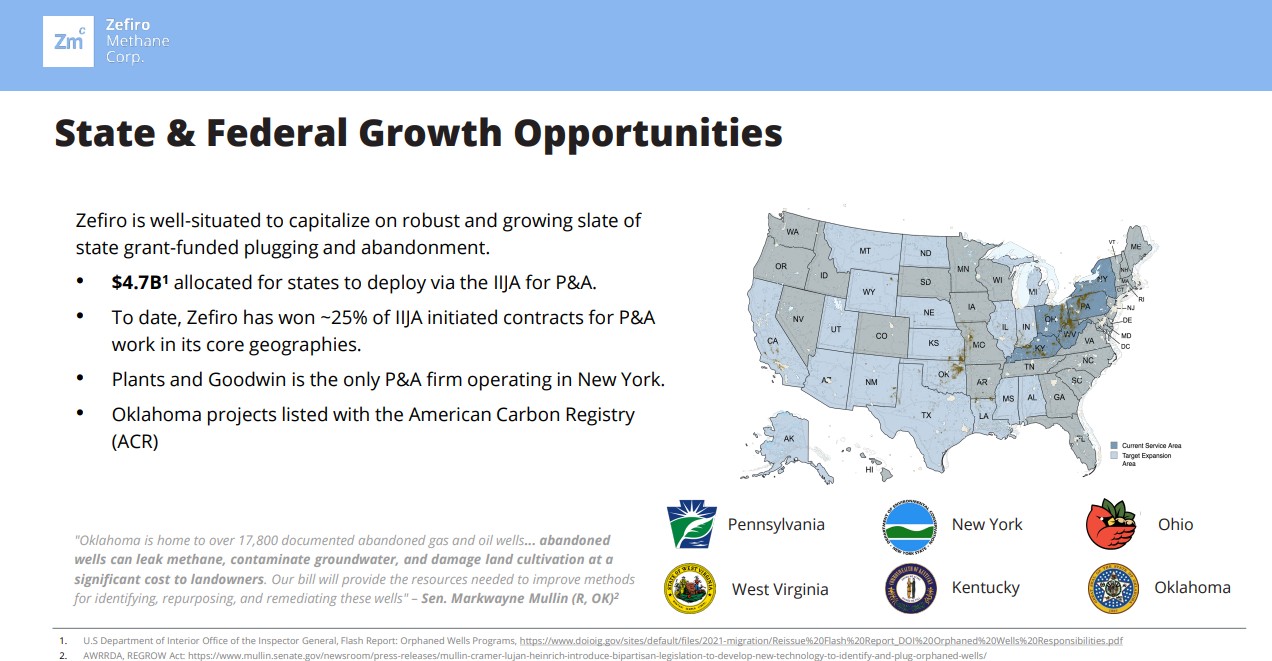
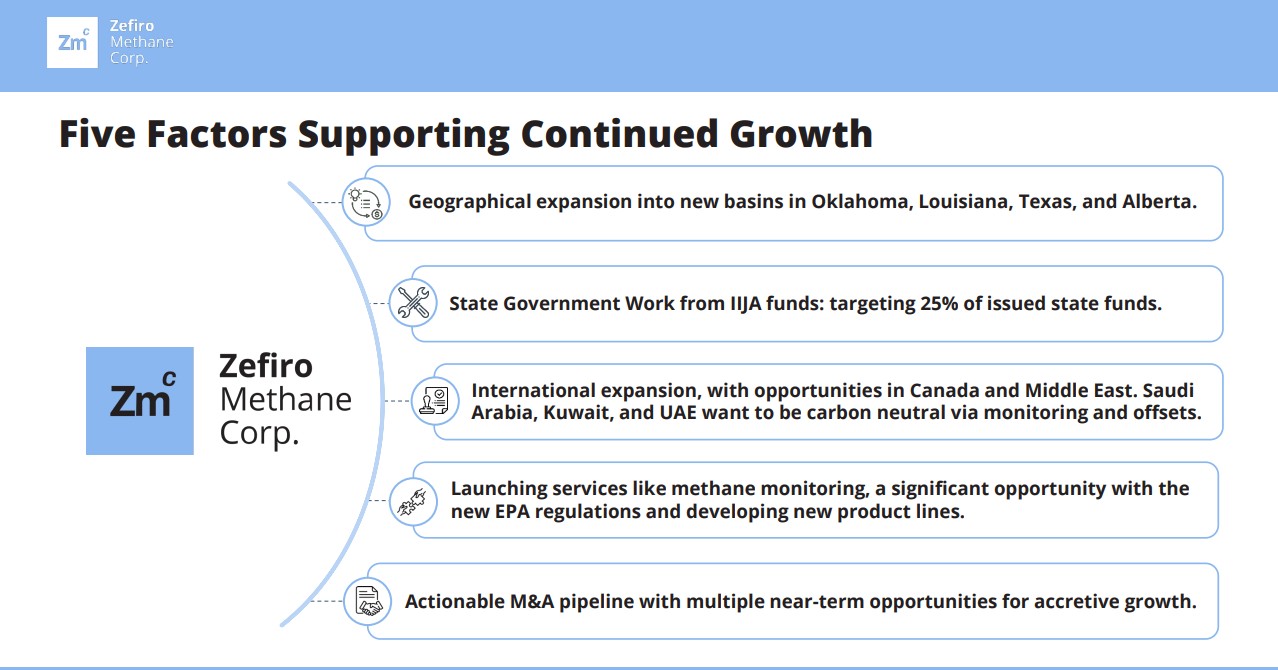
Zefiro Methane Corp.'s core business draws its primary momentum from the US "Infrastructure Investment and Jobs Act" (IIJA) of November 2021. This law provides funding totaling USD 4.7 billion. The funds are specifically allocated to the identification, closure, and remediation of millions of abandoned oil and gas wells (orphan wells). States receive these funds through a three-tiered grant system consisting of Initial Grants, Formula Grants, and Performance Grants. For Zefiro's specialized subsidiaries, this results in a stable, recession-proof order book thanks to multi-year public tenders. However, since the federal budget covers only a small portion of the estimated total remediation need of USD 280 billion, the market potential for Zefiro will remain in the long term even after the IIJA program ends.
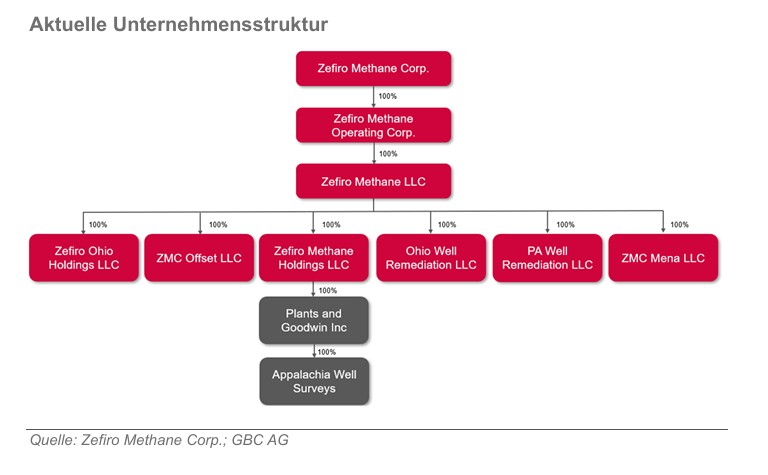
In addition, the company minimizes concentration risks through consistent geographic expansion beyond the traditional Appalachian Basin. Starting from its core markets of Pennsylvania, Ohio, and West Virginia, the service provider has already expanded its presence to 8 states (including Oklahoma and Louisiana). A key growth driver in this regard was the acquisition of five heavy drilling rigs (derrick rigs) from Viking Well Service in May 2026, which dramatically increased fleet capacity. These mobile rigs enable the subsidiary Plants & Goodwin to expand directly into five new states: New Jersey, Michigan, Indiana, Illinois, and Iowa. With this presence in 13 states, Zefiro now covers the most critical problem areas in the US and comprehensively serves both government tenders and private remediation contracts.
GBC Research Initiates Coverage with a "Buy" Rating and a CAD 2.12 Price Target
Analysts forecast dynamic growth in Zefiro Methane's valuation metrics, with the projected price-to-earnings (P/E) ratio falling from negative values during the loss-making years to an attractive level of 11.3 in fiscal year 2026/27 and a favourable 8.3 in the following year, 2027/28. At the same time, the enterprise value-to-EBITDA ratio (EV/EBITDA) improves dramatically from -11.3 in fiscal year 24/25 to 5.4 in fiscal year 2026/27 and to 4.4 in the following year. This fundamental valuation is based on solid forecast assumptions, which initially project a jump in revenue to USD 45.18 million for fiscal year 2025/26 and up to USD 66.85 million in 2027/28. A key pillar of this organic growth is the three-year major contract with the Ohio Department of Natural Resources worth approximately USD 19.6 million, which guarantees continuous base capacity utilization through 2029.
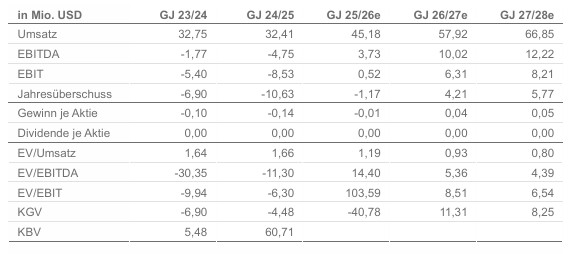
It is also assumed that the Viking rigs acquired in May 2026 will generate additional annual revenue of a conservatively estimated USD 8.0 million starting in fiscal year 2026/27, following their full integration into the organization. For the high-margin carbon credit business, a conservative restart of USD 0.60 million is expected starting in the second half of the year following the introduction of the revised ACR methodology in the fall of 2026. Finally, for fiscal year 2027/28, experts expect an expansion of the project portfolio in this voluntary CO₂ market, which is projected to increase revenue in this sub-segment to USD 2.50 million.
In its initial coverage, the research firm GBC AG assigns a clear "Buy" rating to the stock. The key valuation result is a price target of USD 1.50 or CAD 2.12, which represents significant upside potential of over 200% compared to the current price of approximately CAD 0.61. A key aspect of the investment case is the operational turnaround, which has led to significant improvements in revenue, EBITDA, cash flow, and cost structure since the management change in June 2025. In addition, multi-year government contracts and ongoing projects ensure high revenue visibility for the coming fiscal years. The Viking equipment acquired in May 2026 significantly expands rig capacity, supporting regional expansion. The planned resumption of the carbon credit business is considered a high-margin additional option. While EBITDA figures for the past two fiscal years were still significantly negative at USD -1.77 and USD -4.75 million, respectively, analysts forecast a sustained return to profitability in the current 2025/26 cycle. For the 2026/27 fiscal year, EBITDA of USD 10.02 million is expected, which is projected to rise to USD 12.22 million in the following year, 2027/28. Net income is also forecast to reach the profitable break-even point of USD 4.21 million starting in 2026/27. In summary, the positive valuation assessment is based on a combination of an established market position in the crisis-resistant government-regulated orphan well sector and high-percentage growth opportunities in the voluntary emissions trading market.
High-Growth Small-Cap with Doubling Potential: Why Zefiro Methane Is Outperforming the Energy Sector
Zefiro Methane (Ticker: ZEFI) is strategically positioned to benefit from a highly attractive sweet spot at the intersection of environmental technology, critical energy infrastructure, and the regulatory-driven emissions trading market. The business model capitalizes on three fundamental megatrends: stricter ESG regulations, the US government's infrastructure program (IIJA), and the rapidly rising, baseload-capable energy demand of American AI data centers. Through an aggressive expansion and M&A strategy, management is scaling up operational capacity at record speed. The bottom line for investors: given the total addressable market and the company's tremendous operational momentum, the current valuation falls far short of reflecting its true potential.
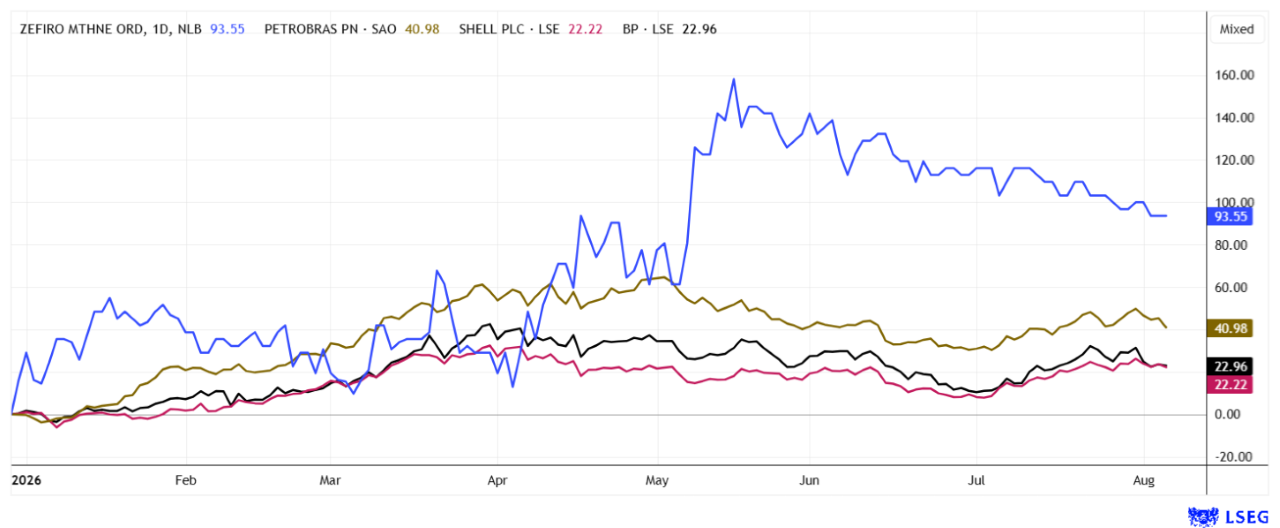
A look at relative performance underscores the fundamental decoupling from the traditional energy sector. While oil and gas majors such as Shell, BP, and Petrobras are tied to the volatile commodity cycle, Zefiro operates in a crisis-resistant, structurally growing market. The stock has reflected this operational strength since the beginning of the year with an outperformance of around 50%, effortlessly outpacing the global energy sector.
If the Iran conflict ends abruptly, oil stocks will fall again, while Zefiro will benefit from a completely different approach.
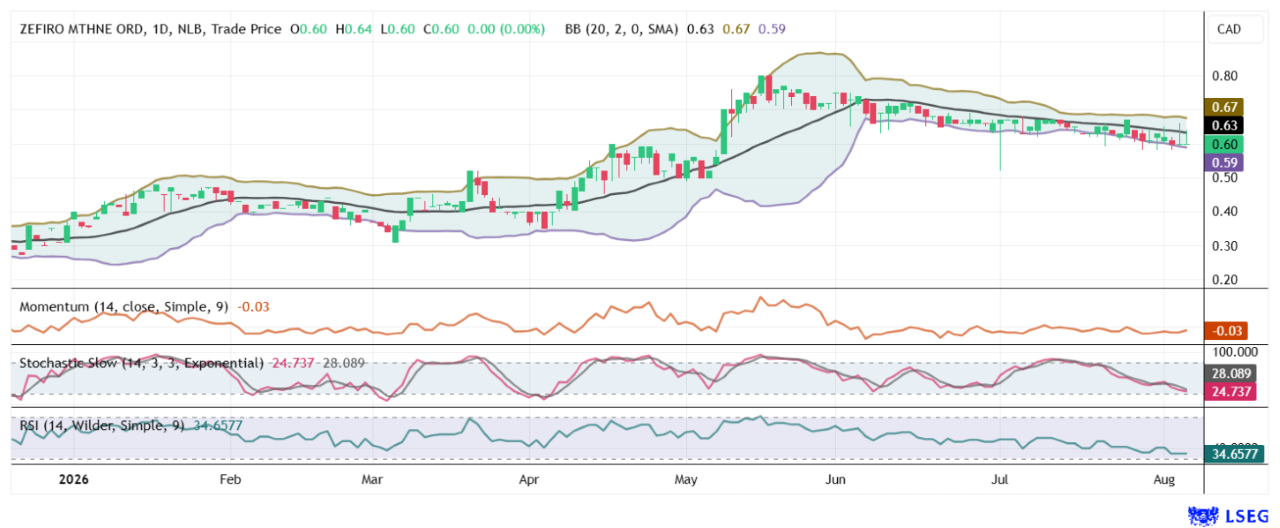
With its consistent expansion into high-margin segments such as methane measurement technology and the monetization of carbon credits, Zefiro is on the verge of achieving a sustainable valuation rating. With a current market capitalization of just under CAD 50 million, investors are looking at a fully operationally funded, rapidly expanding company. GBC analysts' price target of CAD 2.12 underscores the significant upside potential for the current fiscal year 2026/27, while the rapidly growing order book provides solid downside protection. The planned uplisting process to a higher stock exchange segment serves as an additional catalyst for institutional liquidity and visibility in the capital market.
IIF host Lyndsay Malchuk speaks with CEO Catherine Flax about the growing threat of methane emissions and the company's further expansion plans.
This update follows the initial report dated July 17, 2026. Click here for the analysis.